Zeolite rotary wheel VS activated carbon adsorption device: How to choose the VOCs treatment equipment?
I. Core Differences: The Underlying Logic of the Two Technical Routes
1.1 Adsorption Materials and Working Principles
The core material of the activated carbon adsorption device is porous carbon, which captures VOCs molecules in the pores through physical adsorption. Its advantages include a large specific surface area and broad-spectrum adsorption capacity for various organic molecules; however, the "binding force" of physical adsorption is relatively weak, and capacity loss is prone to occur during desorption and regeneration.
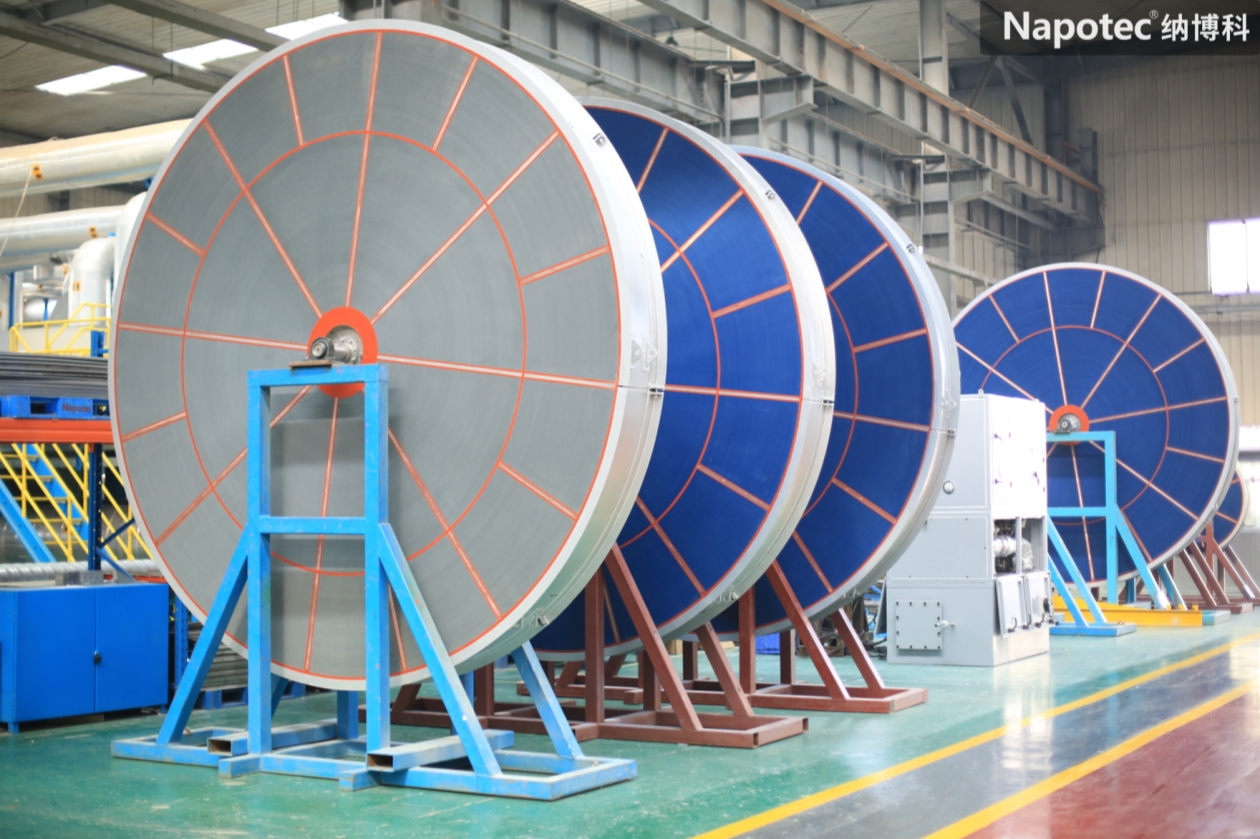
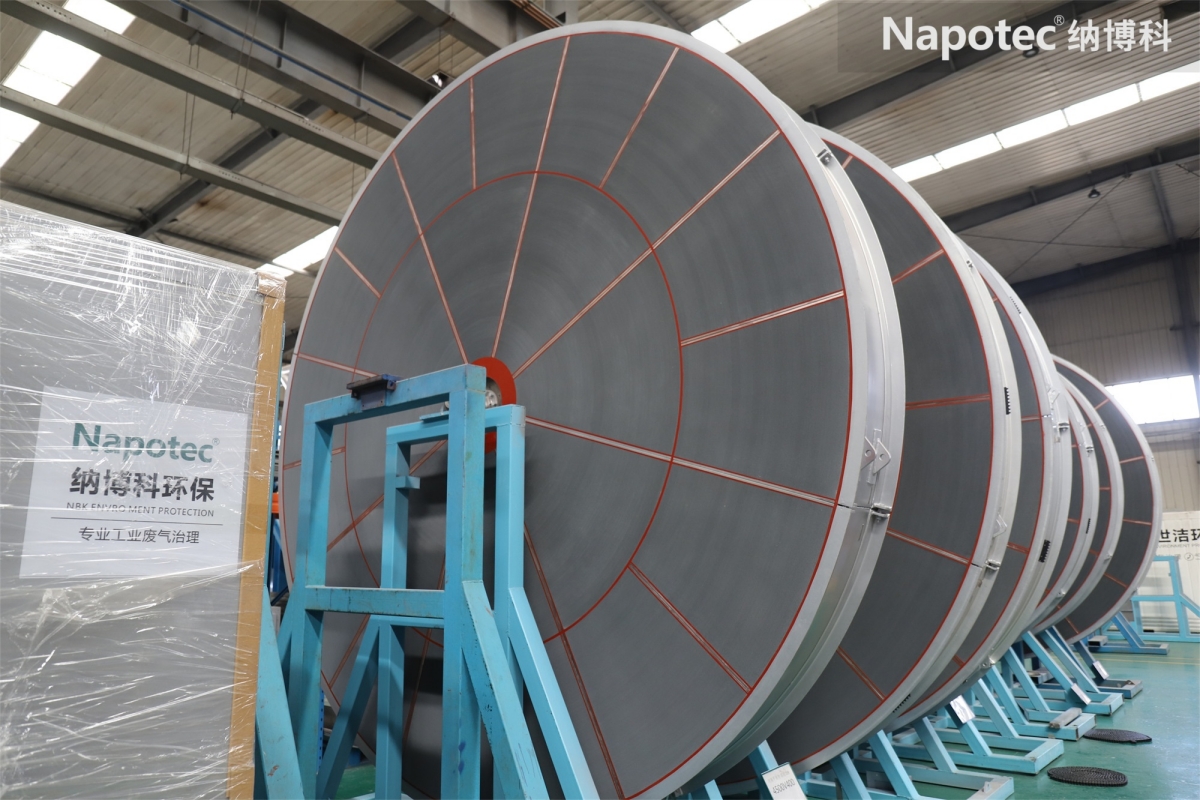
The zeolite rotor uses hydrophobic molecular sieves (silicalite) as the adsorption medium. Zeolites have a regular microporous structure with uniform pore diameters, and they have selective adsorption capacity for VOCs molecules of specific sizes. The rotor rotates continuously at a speed of 1 to 6 revolutions per hour, with the adsorption zone, desorption zone, and cooling zone operating simultaneously to achieve "continuous adsorption and desorption" operations. This continuous operation feature is the core advantage of the zeolite rotor compared to the activated carbon fixed bed.
1.2 A Key Turning Point: Airflow and Concentration
The two technical routes are not a "who replaces who" relationship; rather, they are suitable for different operating conditions.
Activated carbon adsorption device: Suitable for medium and low concentration VOCs purification. Generally, the exhaust gas concentration is below 1500 mg/m³, and it is particularly suitable for small airflow (< 3000 m³/h) and intermittent emission scenarios.
Zeolite rotor: Specifically designed for high airflow and low concentration scenarios. The processing airflow can reach 5000 to 250000 m³/h. Through concentration, low-concentration exhaust gas is transformed into high-concentration and low-airflow exhaust gas and then sent to the subsequent oxidation equipment. The concentration ratio can reach 10 to 30 times.
In simple terms: Select activated carbon for intermittent operation with low airflow, and select the zeolite rotor for continuous operation with high airflow - this is the basic judgment logic for selection.
II. Five-Dimensional Comparison: Zeolite Rotor and Activated Carbon Adsorption Device
Dimension One: Adsorption Performance and Stability
Comparison item | Activated carbon adsorption device | Zeolite rotor |
Initial removal rate | Reach a relatively high level | Stable at 90% to 98% |
Performance stability | Continuously declining after use | Maintain stability over a long period of time |
Life of adsorption materials | Approximately 2 years (15,000 hours) | 5 to 10 years |
High humidity adaptability | Humidity > 70% Efficiency decreases by 30% to 50% | Hydrophobic zeolites remain highly efficient even under high humidity conditions. |
Activated carbon can achieve good removal effects initially, but its performance will continuously decline over time. Industry data shows that the lifespan of activated carbon is approximately 2 years (15,000 hours). After that, its performance significantly deteriorates and there is a risk of not meeting environmental protection standards. Zeolite wheels, on the other hand, can maintain stable performance for 5 to 10 years under normal operating conditions, and the adsorption materials do not need to be frequently replaced.
The difference between the two becomes more significant in high-humidity conditions. When the relative humidity exceeds 70%, the adsorption efficiency of activated carbon drops by 30% to 50%, while hydrophobic zeolite can still efficiently adsorb even at humidity levels above 80%. For industries with high humidity, such as painting and printing, this difference directly affects the ability to meet environmental protection standards.
Dimension Two: Safety and Temperature Resistance
This is the dimension that is most easily underestimated but is the most crucial in the selection decision.
The temperature resistance of activated carbon is its inherent weakness. The de-adsorption temperature of conventional activated carbon exceeds 120℃, which poses a fire hazard. The upper limit of its safe de-adsorption temperature is only around 100℃. When the exhaust gas contains components that are prone to oxidation reactions, the heat generated during adsorption may cause the bed temperature to rise, increasing the risk of spontaneous combustion. Zeolite wheels, on the other hand, have excellent temperature resistance and can typically withstand de-adsorption temperatures above 200℃. Zeolite itself is non-flammable, fundamentally eliminating the safety hazard of the adsorption material catching fire.
For exhaust gases containing high-boiling-point components or easily polymerizable substances (such as UV paint exhaust gas in the painting industry), the safety risks of the activated carbon device are particularly prominent. This is one of the reasons why environmental protection departments in many places have listed the safety risks of activated carbon facilities for investigation as a key task in recent years.
Dimension Three: Hazardous Waste Disposal and Environmental Compliance
The cost that is most underestimated for activated carbon adsorption devices comes from hazardous waste disposal.
The waste activated carbon after adsorption is classified as HW49 hazardous waste (code 900-039-49) and must be collected, stored, transferred, and disposed of in accordance with hazardous waste management requirements. The cost of hazardous waste disposal is approximately 3,000 to 5,000 yuan per ton, and in some regions, the disposal cost can even reach 8,000 to 12,000 yuan per ton. For example, for honeycomb activated carbon, it is recommended to replace it every 2 to 3 months, while for granular activated carbon, it is approximately every 3 to 6 months. The annual replacement costs of activated carbon and hazardous waste disposal costs constitute the largest hidden cost of the activated carbon solution.
The hazardous waste generation of zeolite wheels is only about 1/10 of that of activated carbon fixed beds. Zeolite wheels do not require the replacement of adsorption materials during daily operation and only need to undergo a high-temperature regeneration process once every 3 to 5 years, and the regeneration process can be completed on-site without generating external hazardous waste. From the perspective of environmental compliance, the zeolite wheel solution has significant advantages in long-term operation.
Dimension Four: Maintenance Complexity and Management Burden
The maintenance work of activated carbon adsorption devices is relatively cumbersome. It is necessary to regularly monitor the saturation of activated carbon (by relying on pressure difference or VOCs concentration sensors), replace activated carbon every 1 to 2 years (in some high-frequency operating conditions, it is necessary to replace it every 2 to 3 months), and the replacement process involves multiple compliance procedures such as hazardous waste loading, storage, declaration, and transportation. Valves and control components in the multi-bed switching system also require regular maintenance.
The maintenance of zeolite wheels is relatively simple. The system has a high degree of automation, and daily maintenance only requires regular cleaning of the wheel surface and inspection of the seals. The main body of the zeolite wheel does not need to be frequently replaced. For enterprises lacking professional environmental protection maintenance personnel, the "low labor dependence" characteristic of zeolite wheels can effectively reduce management risks.
III. Selection Decision Tree: Choose the Right Equipment for the Right Scenario
Based on the analysis of the above five dimensions, we suggest making selection judgments according to the following logic:
Choose activated carbon adsorption devices for the following scenarios:
Exhaust gas volume is less than 3,000 m³/h and the emission is intermittent operation.
The initial budget is limited and the project scale is small (such as auto repair shops, laboratories)
The composition of the exhaust gas is simple and does not contain high-boiling-point substances or easily polymerizable components
The local hazardous waste disposal channels are smooth and the disposal cost is controllable
Scenarios where zeolite wheels are preferred:
The exhaust gas volume is greater than 5000 m³/h and it is in a continuous operation condition
The emission standards are strict and require long-term stable compliance (such as in key areas and sensitive industries)
The exhaust gas contains high-boiling-point components or has high humidity, and activated carbon is difficult to operate stably
The enterprise lacks a professional environmental protection operation team and hopes to reduce management burden
The project cycle is long (more than 5 years), and the goal is to achieve the optimal cost throughout the life cycle
The selection practice of a certain new energy equipment project in Taizhou verified this logic: 1# spray booth (40,000 m³/h, intermittent operation) adopts the activated carbon fixed bed scheme, achieving compliance emissions with lower initial investment; 2# spray booth (120,000 m³/h, continuous operation) adopts the zeolite wheel scheme, solving the problem of large exhaust gas volume with higher stability and lower long-term costs. In the same project, different technical routes are adopted for different working conditions, achieving the optimal balance of "low exhaust gas volume and low cost, high stability for large exhaust gas volume".
IV. Technological accumulation of Naboco in zeolite wheel field
If your working conditions point to the zeolite wheel scheme, choosing a manufacturer with source manufacturing capabilities and full life cycle service capabilities is crucial.
Domestic substitute pioneer. Naboco's parent company was established in 2004 and is one of the earliest enterprises in China to engage in the research and development of molecular sieve adsorption concentration wheels. It broke the monopoly of foreign technology in this field for several decades. The company has the qualification of a national enterprise technology center, with an average annual R&D investment of over 7 million yuan, holds more than 75 patent authorizations, and participated in the drafting of national industry standards for molecular sieve wheels.
Customized ability for working condition adaptation. Zeolite wheels are not "standard products". The characteristic pollutants in the exhaust gas from different industries vary significantly - paint fumes and resin components in the coating industry, isopropyl alcohol and esters in the semiconductor industry, benzene series and ketones in the chemical industry - the corresponding zeolite formulas and wheel selection parameters are different. Naboco has accumulated a large amount of working condition data in 14 factories of Great Wall Automobile, 32 wheel projects of Xuzhou Heavy Industry Group, and the replacement of old imported wheels of Beijing Benz, and can conduct one-to-one selection and formula customization based on the actual exhaust gas parameters of the customer.
Full life cycle service guarantee. Naboco provides full life cycle services covering selection design, installation and commissioning, daily operation, performance testing, high-temperature regeneration and wheel replacement. In the scenario of replacing old imported wheels, it has completed replacement services for projects such as Ideal Automobile's Changzhou Base and SAIC Volkswagen's Jiaodian Second Factory, and the replacement wheels have stable processing efficiency reaching the design requirements after replacement. The company's own gas detection laboratory can provide professional detection services such as wheel performance evaluation, adsorption efficiency measurement, and zeolite specific surface area analysis. At the same time, high air volume means that the consumption of activated carbon is large and the replacement frequency is high, resulting in a significant increase in hazardous waste generation and disposal costs. The zeolite rotor adopts a continuous rotating integrated design of adsorption - desorption - cooling, and a single unit can handle an air volume of over 120,000 m³/h. The operational stability and long-term economic performance are significantly superior in the high air volume scenario.
Q3: Waste activated carbon is classified as hazardous waste. How high is the disposal cost?
A3: Waste activated carbon belongs to hazardous waste of category HW49. The disposal fee is approximately 3,000 to 5,000 yuan per ton, and in some areas, it can be as high as 8,000 to 12,000 yuan per ton. Taking honeycomb activated carbon as an example, it needs to be replaced once every 2 to 3 months under normal conditions. Adding the cost of purchasing new carbon, the annual operating cost of the activated carbon solution, including carbon replacement and hazardous waste disposal, can account for 45% to 70% of the total cost. This is the biggest hidden cost of the activated carbon solution.
Q4: How much higher is the initial investment of the zeolite rotor compared to activated carbon? Is it worth it?
A4: Taking a processing capacity of 20,000 m³/h as an example, the initial investment for the activated carbon device is approximately 350,000 yuan, while the zeolite wheel solution is about 1.1 million yuan. The former is approximately one-third of the latter. However, if the full life cycle cost is calculated based on a 5-year operation period, the cumulative operating cost (including carbon replacement and hazardous waste disposal) of the activated carbon solution is about 2 to 4 times that of the zeolite wheel solution. The total cost over 5 years has already exceeded that of the zeolite wheel solution. For enterprises that pursue long-term stable operation, the "value for money" of the zeolite wheel can be reflected within 3 to 5 years.
Q5: Does Qingdao NaboCo provide selection comparison analysis services?
A5: Yes. The NaboCo technical team can conduct selection comparison analysis between the zeolite wheel and the activated carbon solution based on the exhaust gas parameters provided by the customer (such as air volume, concentration, composition, temperature, humidity, etc.), and issue a full life cycle cost calculation report covering initial investment, operating costs, maintenance frequency, hazardous waste disposal costs, etc. You can obtain support through the official website napotec.com or by directly contacting the technical service team.
Qingdao NaboCo Environmental Technology Co., Ltd.
Zeolite wheel original manufacturer | National industry standard drafter for molecular sieve adsorption concentration wheels | Over 3,500 project cases
Official website: napotec.com | Service hotline: See contact information on the official website
Provide VOCs treatment equipment selection consultation, zeolite wheel customization design, performance testing, high-temperature regeneration, etc. throughout the life cycle services