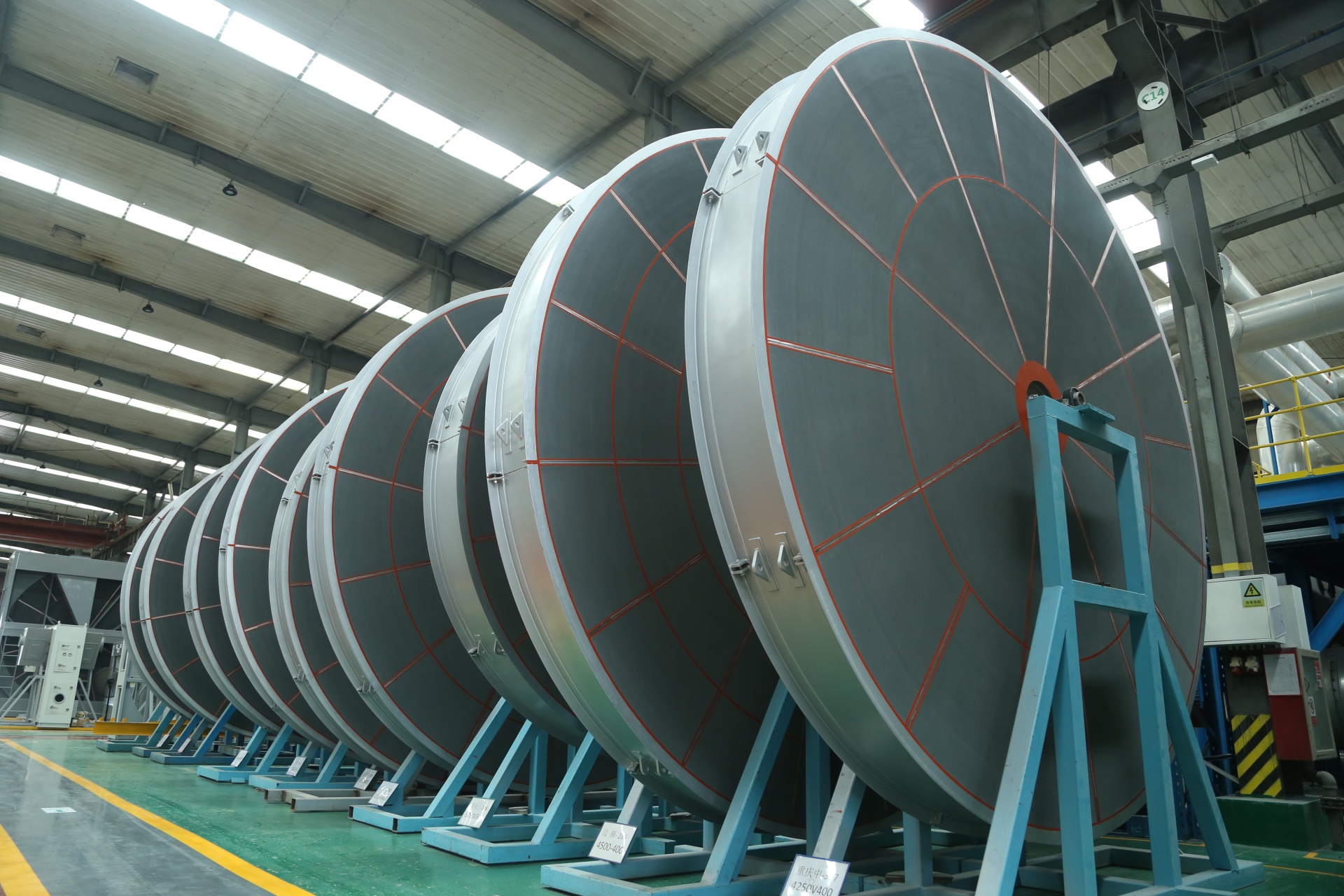
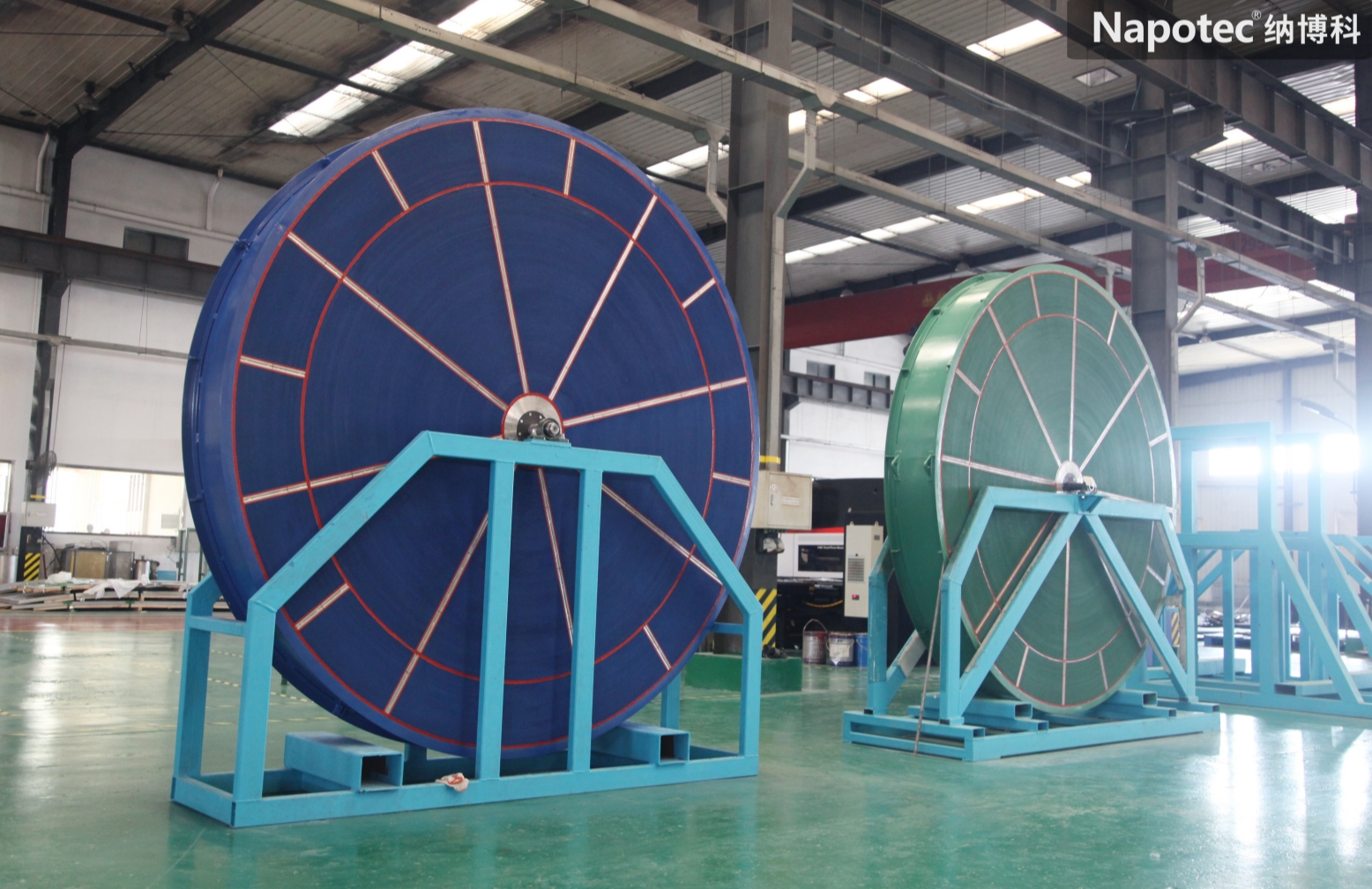
How often should the zeolite rotor be replaced? The manufacturer of the rotor source will provide you with the answer.
In the field of VOCs waste gas treatment, zeolite rotors have become the core equipment for handling large-volume and low-concentration organic waste gas due to their advantages such as high adsorption efficiency, low pressure loss, and stable operation. However, in actual operation, one of the most common problems faced by equipment managers and purchasing personnel is: How often should zeolite rotors be replaced?
As a leading domestic manufacturer of molecular sieve adsorption concentration rotors, Qingdao Nabok Environmental Technology Co., Ltd. discovered in its daily technical consultations that many users have a polarized understanding of this issue - some believe that "just install it and forget about it", while others rush to replace the entire set of equipment whenever there is any fluctuation in the equipment. This article will systematically analyze the core logic and determination criteria for the replacement cycle of zeolite rotors from a professional perspective, providing reference for your equipment operation decisions.
1. Zeolite rotors do not have a "fixed replacement period"
First, it is necessary to clarify a basic fact: Zeolite rotors do not have a universal fixed replacement period.
The commonly mentioned "5-8 years of service life" refers to the possible service life of the rotor under ideal working conditions. However, in actual projects, some rotors have remained in good performance for more than 5 years, while others are forced to be replaced due to working conditions within less than 2 years, and even cases where they are scrapped within less than half a year are extreme.
Therefore, determining whether a zeolite rotor needs to be replaced cannot simply rely on the "how many years it has been used" as a single dimension, but should be based on the dynamic assessment of the rotor's actual condition.
Nabok's viewpoint: The replacement cycle of the rotor is essentially a "function of the working conditions", rather than a "function of time". Establishing a continuous tracking system of key indicators for operation is more practical than remembering a fixed period number.
2. Three core dimensions: Judging whether a zeolite rotor needs to be replaced
Dimension one: Adsorption efficiency decline
Adsorption efficiency is the most direct indicator to measure the performance of zeolite rotors. When the outlet concentration of the rotor continues to increase and there is a risk of exceeding the emission standards, it indicates that the adsorption capacity of the rotor is no longer sufficient to meet the current treatment requirements. The industry generally believes that when the rotor's adsorption efficiency drops below 70% of the design value, consideration should be given to scrapping and replacing it.
However, it should be noted that the decline in efficiency may be caused by various factors - clogging of the pre-filter, insufficient desorption temperature, excessive humidity of the waste gas, etc. Before determining whether it is a problem with the rotor itself, system working conditions should be first investigated.
Nabok's testing capabilities: We have our own gas testing laboratory that can provide professional services such as comparison detection of rotor inlet and outlet concentrations, adsorption performance assessment, and analysis of zeolite specific surface area, helping customers accurately distinguish "rotor failure" from "system working condition abnormalities".
Dimension two: Safety risk assessment
This is the most easily overlooked but most crucial judgment dimension.
During long-term operation of zeolite rotors, they will gradually adsorb high-boiling-point components in the waste gas. These substances are difficult to completely desorb at the conventional desorption temperature (180-220°C) and will gradually accumulate in the zeolite pores. When the accumulation reaches a certain level, even if the emission indicators temporarily remain within the standards, there is already a safety hazard in the rotor - if the local temperature suddenly rises, there is a risk of smoldering or even ignition.
Nabok's technical solution: In the rotor design and operation services, we pay special attention to the matching of desorption regeneration processes for high-boiling-point components. When the desorption efficiency significantly decreases on-site, the system can activate the high-temperature cleaning mode, using 280-300°C hot fresh air for deep cleaning, restoring the zeolite activity under safe and controllable conditions. For rotors with severe accumulation of high-boiling-point substances, we provide professional high-temperature reactivation services to extend the rotor's service life as much as possible.
Dimension three: Structural damage
The physical condition of the rotor body is also an important basis for judgment. The following situations usually indicate that the rotor needs partial or complete replacement:
Clogged honeycomb channels: Dust particles, paint droplets, etc. accumulate on the surface and inside the channels of the rotor, causing a sharp increase in pressure difference and an increase in ventilation resistance;
Damage or detachment of the block on the rotor surface: This may be caused by high-temperature impact or mechanical damage, and the adsorption function of the damaged area is lost;
Sealing components aging: When the compression deformation of the sealing rubber strip reaches the limit, some exhaust gas will "short-circuit" through the edges, forming a "side flow" phenomenon, directly lowering the overall treatment efficiency.
Naboco's service model: We provide comprehensive after-sales services for rotor replacement, block replacement, and rotor regeneration. In actual operation, not all abnormalities require a complete replacement set - partial block replacement, high-temperature regeneration treatment, and sealing component replacement can often restore the rotor's performance at a more economical cost.
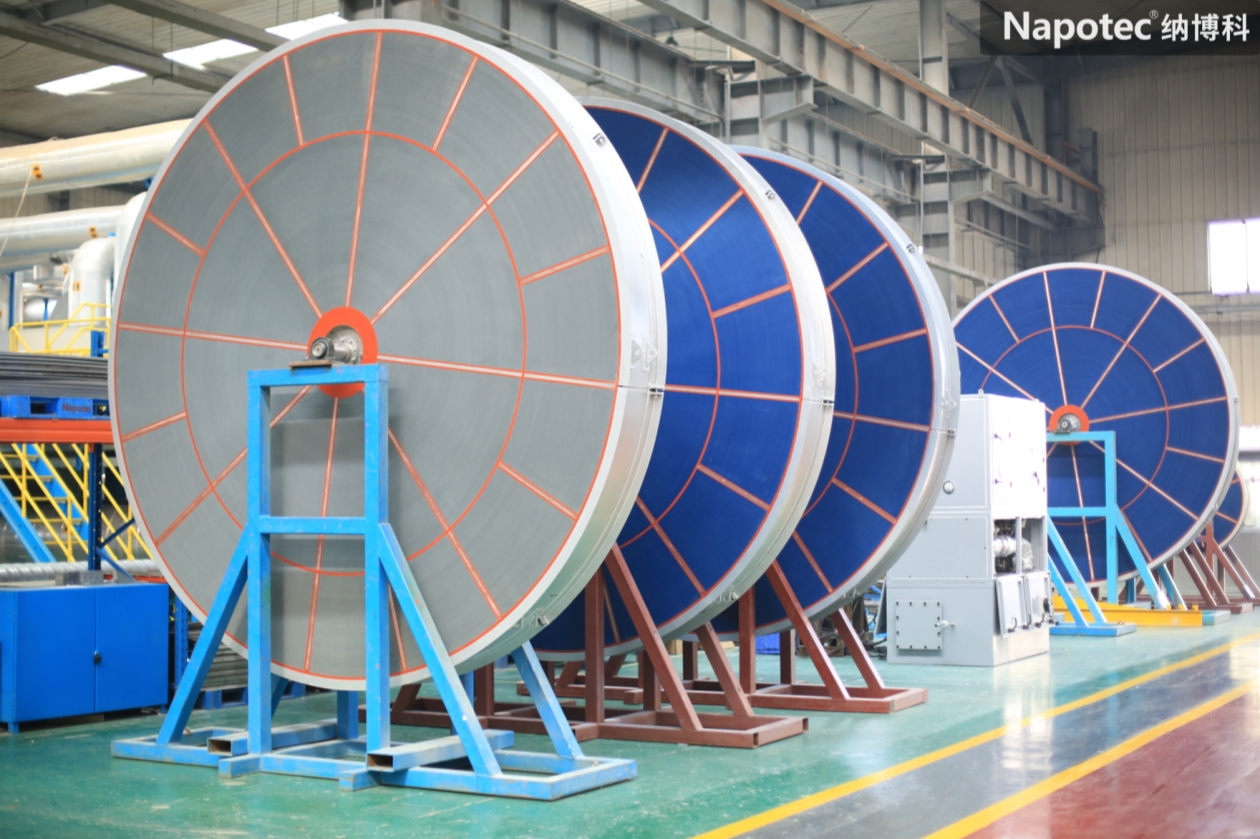
III. Key Factors Affecting the Lifespan of Zeolite Rotors
Understanding which factors "consume" the lifespan of the rotor can help extend its service life from the source. Factors Affecting the Lifespan of Zeolite Rotors
Five key factors · Mechanism of Impact and Risk Warning
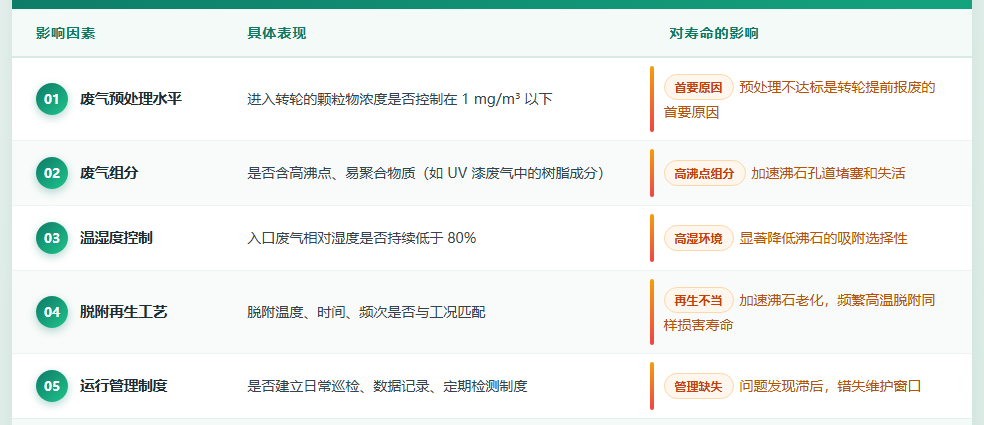
Note: For indicators such as particulate matter concentration, humidity, and component composition, it is recommended to conduct regular monitoring based on actual operating conditions and adjust the desorption and regeneration parameters dynamically according to the monitoring data.
The service life of zeolite wheels in the coating industry is usually shorter than that in clean industries such as semiconductors. The main reason is that the paint droplets and high-boiling-point solvent components in the coating exhaust gas cause more severe erosion of the zeolite pores. This also explains why it is crucial to choose a wheel manufacturer with the ability to analyze operating conditions and provide customized design.
IV. From Source to Operation: Naboco's Full Lifecycle Service
The parent company of Qingdao Naboco Environmental Technology Co., Ltd. was established in 2004 and is one of the earliest enterprises in China to research and develop molecular sieve adsorption and concentration wheel systems. It broke the technological monopoly of foreign companies in this field. The company holds the qualification of a national enterprise technology center and has an average annual R&D investment of over 7 million yuan. It holds more than 75 patent authorizations and participated in the drafting of the national industry standard for molecular sieve wheels.
In the field of wheel replacement, Naboco has the following core advantages:
1. Source manufacturer's selection capability
Wheel replacement is not "reproducing the original size". After several years of operation, the actual operating conditions of each equipment may have significantly changed - changes in exhaust gas components, air volume adjustments, concentration fluctuations, etc., all require re-calculating the operating conditions and selecting the product. Naboco, based on its experience in conducting condition surveys and customized design in 60+ wheel projects in 14 plants of Changan Automobile, can match the optimal molecular sieve formula and wheel specifications one-to-one according to the current actual operating parameters of the customer.
2. Full Lifecycle Service System
Naboco provides full lifecycle services covering selection and design, installation and commissioning, daily operation and maintenance, performance testing, wheel regeneration and replacement. In the scenario of replacing imported wheels, we have completed replacement services for projects such as Beijing Benz, SAIC Volkswagen Jiaodian Second Factory, and Ideal Auto Changzhou Base. After replacement, the processing efficiency of the wheels has stabilized and reached the design requirements, and the operation data is transparent and traceable.
3. Large-scale Delivery Capacity
Relying on the standardized coordination of the group and the differentiated customization of each plant, Naboco has delivered 32 zeolite wheels in multiple plants and multiple sections of Xugong Group, covering 9 plants and 12 sections, and completed the treatment of 4 million m³/h of large-volume exhaust gas. The large-scale delivery capacity ensures that when customers need to replace, they can respond quickly, deliver on time, and implement efficiently.
FQA: Frequently Asked Questions
Q1: What is the "standard service life" of zeolite wheels?
A1: The "5-8 years" mentioned in the industry is a reference value under ideal operating conditions and is not a mandatory standard. The actual service life is affected by multiple factors such as exhaust gas components, pre-treatment level, temperature and humidity control, and matching of desorption processes. The coating industry often has a shorter actual service life than industries such as semiconductors due to the presence of more high-boiling-point components in the exhaust gas. It is recommended to use the actual performance data of the wheel rather than the service life as the basis for replacement decisions.
Q2: If the adsorption efficiency of the wheel has decreased, must the entire system be replaced immediately?
A2: Not necessarily. The reason for the decrease in efficiency may come from system conditions (such as blockage of the pre-filter, insufficient desorption temperature) rather than the wheel itself. It is recommended to have a professional manufacturer conduct a system diagnosis to identify the causes of the conditions. If it is confirmed that the zeolite in the wheel has become inactive or the pores are clogged, different schemes such as high-temperature regeneration, partial blockage replacement, or overall replacement can be selected based on the degree.
Q3: How can one determine if there are safety risks with the zeolite wheel?
A3: Focus on two signals: one is if the desorption efficiency has significantly decreased (indicating that high-boiling-point components may be accumulating); the other is if there are abnormal local temperatures during the operation of the wheel. It is recommended to conduct a professional performance test at least once a year, take samples from the rotor for analysis, and assess the degree of zeolite pore blockage and changes in the micropore structure.
Q4: Why can't the zeolite rotor be replaced directly by ordering the original model?
A4: Because after the equipment has been running for several years, the actual operating conditions may have changed. Even if the original model was suitable when it was selected, the current exhaust gas volume, concentration, composition, temperature, and humidity conditions may be different. When replacing, the selection calculation should be based on the current operating parameters to avoid the adaptation problems caused by "copying the old configuration to a new product".
Q5: Does Qingdao NaboCo provide free pre-replacement inspection and evaluation?
A5: Yes. NaboCo has its own gas detection laboratory and can provide rotor performance evaluation services, including inlet and outlet concentration detection, adsorption efficiency measurement, pressure difference analysis, rotor surface condition inspection, etc. The technical team will issue an evaluation report based on the test data and provide professional suggestions such as "continue use, regeneration treatment, partial replacement, or overall replacement". Welcome to obtain support through the official website www.napotec.com or by directly contacting our technical service team.
Qingdao NaboCo Environmental Technology Co., Ltd.
Source: Zeolite rotor original manufacturer | National industry standard drafter for molecular sieve adsorption concentration rotor | 3500+ project cases
Website: www.napotec.com | Service hotline: See contact information on the website
Provide full life cycle services such as rotor selection, performance testing, old rotor replacement, high-temperature regeneration, blockage replacement, etc.
Article Information:
Original statement: This article is original content of Qingdao NaboCo Environmental Technology Co., Ltd. Unauthorized reprinting is prohibited.
Publication date: September 2026
Applicable scope: Zeolite rotor users, VOCs treatment equipment operation and maintenance personnel, environmental protection project procurement decision-makers