The preferred technology for treating exhaust gas from automotive painting processes - the zeolite molecular sieve rotating wheel concentration process
At present, the zeolite rotating wheel adsorption and concentration technology is used for the treatment of VOCs in automotive painting, which can solve the problem of low-concentration VOCs treatment and has been widely recognized. This article, based on the multiple practical engineering application experiences of the zeolite rotating wheel adsorption and concentration technology from Nabisco Company, provides a reference for the current widely concerned treatment of automotive painting VOCs, in order to alleviate the current haze phenomenon.
How to choose the adsorption material
Activated carbon vs. molecular sieve
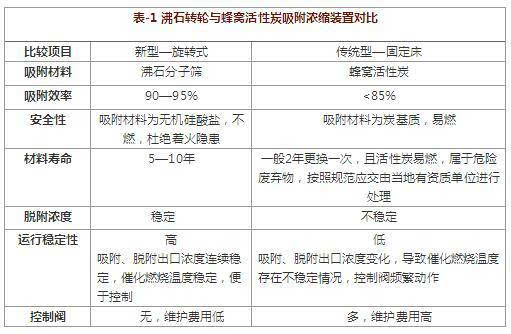
For the selection of adsorption materials, the commonly used adsorbents at present are mainly activated carbon. Activated carbon is generally made from coconut shells and fibers, and has catalytic effects on the surface. For the treatment of ketones and other easily catalyzed components, activated carbon has many limitations. Moreover, activated carbon has strong hydrophilicity and is not suitable for using it for adsorption and concentration of automotive painting VOCs with high water content. Zeolite, as a hydrophobic adsorption material, does not require a water content, and after the de-aluminumization process, the surface active points are removed, thereby avoiding the influence of catalysis. Automotive painting VOCs contain ketones, which are flammable. Zeolite has the characteristics of being resistant to temperature and non-catalytic, so zeolite molecular sieve is selected as the adsorption material for VOCs treatment. The following table lists the comparison between the zeolite rotating wheel and the honeycomb activated carbon adsorption and concentration device.
Stone Rotating Wheel in Automotive Painting Exhaust Treatment Application
The VOCs contained in intermediate coat, topcoat, and varnish, such as methyl isobutyl ketone, n-butyl acetate, n-butanol, toluene, xylene, and trimethylbenzene, are organic substances. Toluene is the most explosive component. The advantages of using a zeolite concentration rotating wheel: Firstly, it can eliminate the risk of fire; Secondly, it can treat large molecules such as xylene and trimethylbenzene, which other adsorption processes are difficult to handle.
Introduction to Automotive Painting Exhaust Treatment Process
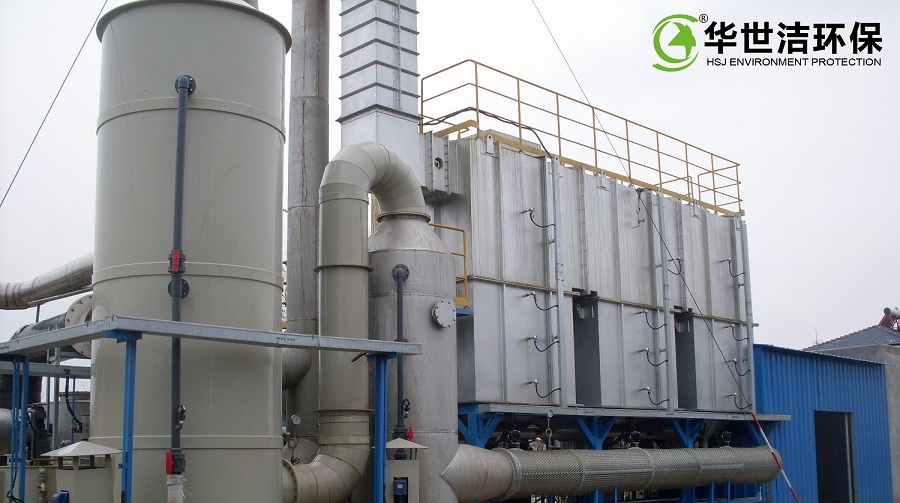
After the exhaust gas is pre-treated by the pre-filter, the content of particulate matter in the exhaust gas is very low. Then, it is introduced into the zeolite concentration rotating wheel by the induced draft fan. Most of the exhaust gas is adsorbed in the adsorption area, and then the clean exhaust gas passes through the exhaust pipe and is discharged into the atmosphere. The adsorption equipment of this system is a large circular disc wheel-shaped system made of ceramic fibers in a honeycomb shape. The surface of the wheel is coated with hydrophobic zeolite molecular sieves. The entire wheel is divided into the adsorption area, the desorption area, and the cooling area. It is driven by a gear. The VOCs exhaust gas is blown into the adsorption area of the rotating wheel by the fan. The vast majority of VOCs in the exhaust gas are adsorbed by the zeolite on the rotating wheel. The exhaust gas becomes relatively clean air and is discharged into the atmosphere. When the wheel is adsorbed and moved to the desorption area, the subsequent hot oxidation unit preheats the high-temperature flue gas to dehydrate and regenerate the adsorbed VOCs. After regeneration, the wheel is transferred to the cooling area, cooled, and continues to adsorb.
The zeolite concentration rotating wheel technology significantly reduces the VOCs emissions from automotive painting and will bring good environmental and social benefits.
Source: Naboco Official Account, Original Title: Zeolite Rotating Wheel is the Preferred Choice for VOCs Treatment in Automotive Painting