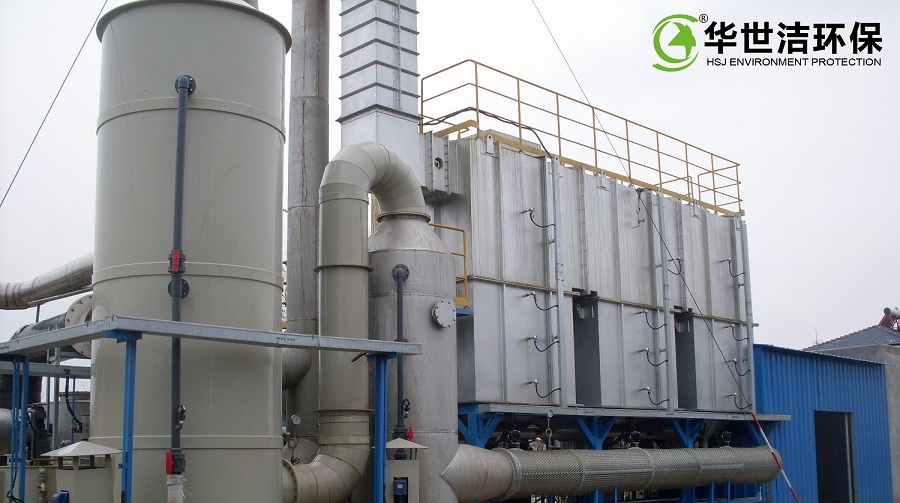
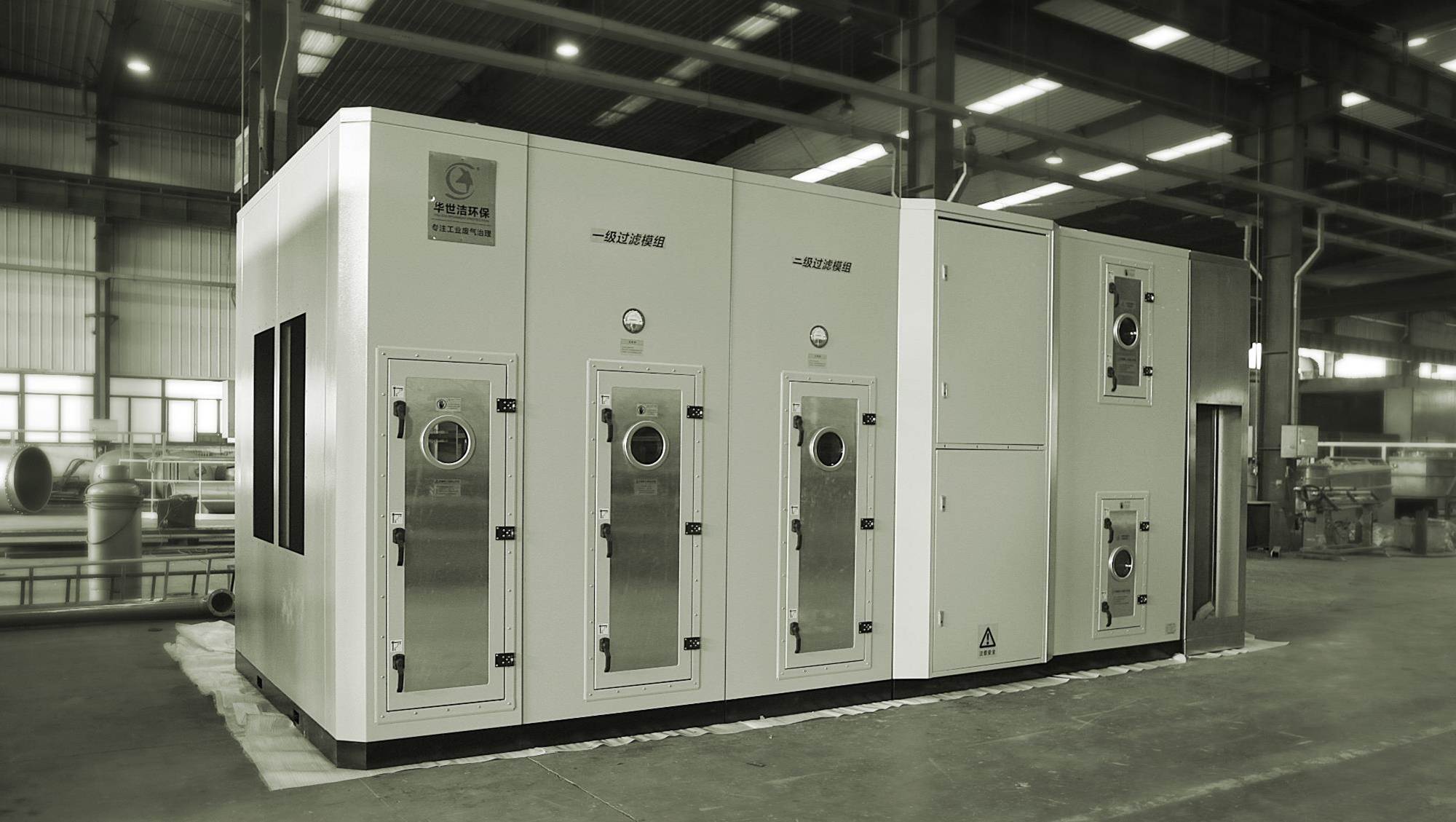
The National Engineering Laboratory for Volatile Organic Compounds Pollution Control Technology and Equipment was officially inaugurated. Huashijie was responsible for introducing the national laboratory.
On January 10, 2017, the National Engineering Laboratory for Volatile Organic Compounds Pollution Control Technology and Equipment was inaugurated in Guangzhou, and the first meeting of the first Technical Committee and Council was held. Leaders such as Gu Pei from the High Technology Industry Division of the National Development and Reform Commission, Chen Guangrong, the Secretary-General of the Guangdong Provincial Environmental Protection Department, and Peng Xinyi, the Vice President of South China University of Technology; experts and scholars including Academician Hao Jiming from the Chinese Academy of Engineering, Academician Tang Benzhong, and Academician Liu Wenchong from the Chinese Academy of Sciences, as well as representatives of outstanding environmental protection enterprises, attended this meeting.
The National Engineering Laboratory for Volatile Organic Compounds Pollution Control Technology and Equipment is led by South China University of Technology and jointly constructed by leading research institutions and enterprises in the industry. The project has a total investment of 11.283 million yuan. Professor Ye Daiqi, the dean of the School of Environment and Energy at South China University of Technology, serves as the laboratory director, and Academician Hao Jiming from the Chinese Academy of Engineering serves as the director of the laboratory's Technical Committee.
Naboco's parent company, Huashi Jie Environmental Protection, as one of the founding units, mainly supports the development of VOCs source and process control in key industries such as petrochemicals, packaging and printing, furniture, automotive and ship manufacturing, electronics, and medicine, promoting the research, development, integration, and engineeringization of common technologies, key materials, new processes, and complete sets of equipment for adsorption, regenerative combustion, catalysis, ozone catalysis, biological, low-temperature plasma catalysis, VOCs leak detection and early warning, etc., achieving overall technical level and key performance indicators at the international advanced or leading level, establishing practical technical assessment systems and standards, and ensuring the healthy development of key industries. Currently, the engineering laboratory established by Huashi Jie covers an area of 600 square meters, with seven systems and a series of supporting facilities, and presents a comprehensive 50,000 air volume VOCs control technology, which is operable, visualizable, and enables zero-distance perception of environmental protection engineering and technology. This is another innovative move by Huashi Jie.
one General Introduction of the National Engineering Laboratory (Part of Huashijie)
The National Engineering Laboratory for Organic Pollutant Pollution Treatment Technology and Equipment. Among them, the "Integrated Test Platform for Industrial Application of VOCs Purification Technology" is an important component of this laboratory. This platform encompasses advanced waste gas treatment technologies from both domestic and international sources. The establishment of this laboratory is conducive to the establishment of advanced and industrial-scale environmental protection technology research and development experimental facilities, the construction of a long-term, integrated VOCs purification technology industrial application comprehensive test platform for industry-university-research-application cooperation, the improvement of the technical and equipment levels in the VOCs treatment industry, and the promotion of international cooperation and exchanges in engineering technology research and development applications.
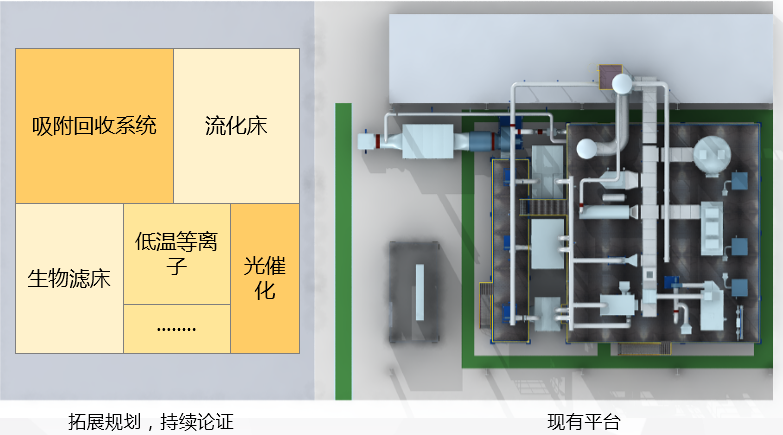
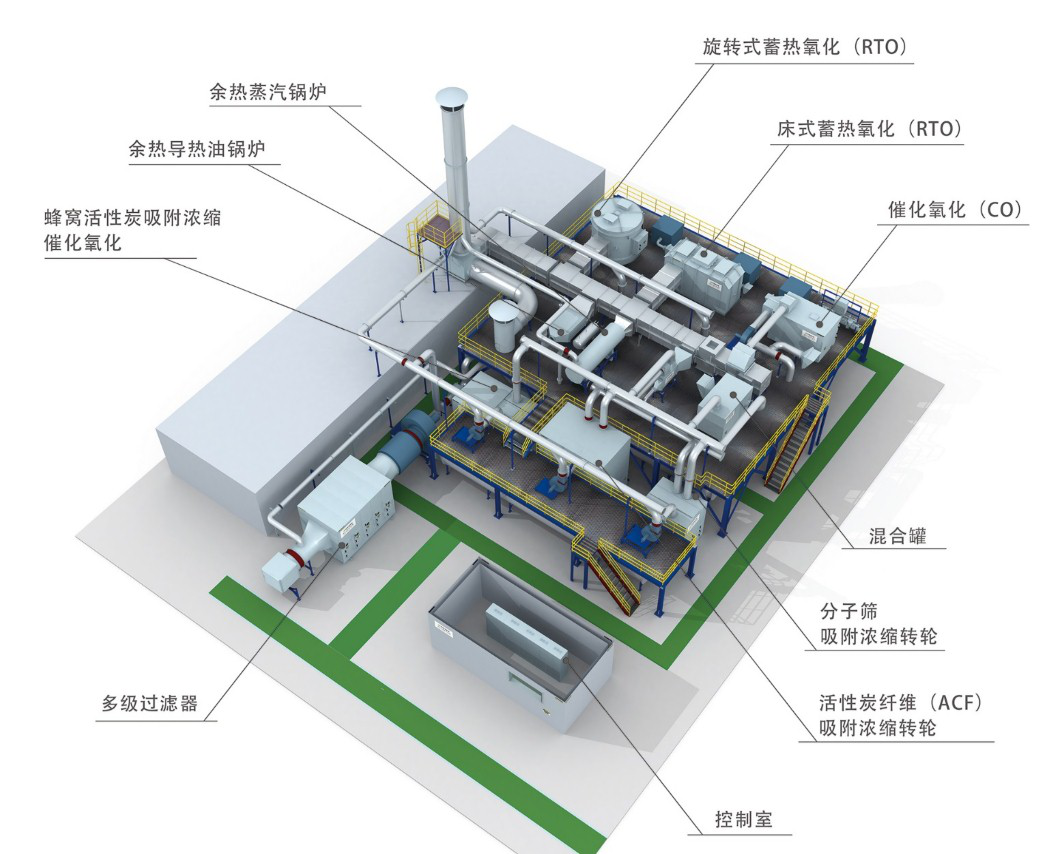
The picture shows our current platform. We will continuously expand and plan, continuously verify, to achieve the sharing of scientific research results and lead the waste gas treatment technology to the world-class level. This platform is designed at a capacity of 50,000 m3/h, simulating the actual on-site conditions, including the pretreatment system, adsorption and concentration system, thermal oxidation system, waste heat recovery system, heat exchange system, online monitoring system, safety and information control system, etc. The free switching of multiple process routes and real-time simulation of the actual on-site conditions aim to provide customers with stable operation, low investment, and low energy consumption high-quality VOCs treatment equipment.
two Introduction to the Various Systems of the VOCs Comprehensive Testing Platform
This platform mainly consists of seven systems: the pre-treatment system, the adsorption and concentration system, the thermal oxidation system, the waste heat recovery system, the heat exchange system, the online monitoring system, and the safety and information control system. It is mainly suitable for treating low-concentration and high-volume exhaust gases. The brief overview of its treatment process is as follows: After the VOCs exhaust gas is pre-treated by multiple filtration devices, it enters the adsorption and concentration device for adsorption and concentration. The clean gas after adsorption and purification is directly discharged into the atmosphere through the chimney; the concentrated organic exhaust gas enters the thermal oxidation device for combustion to generate carbon dioxide and water vapor and be discharged into the atmosphere. At the same time, the heat released during the oxidation reaction is partially used to maintain the operation of the system, and the remaining heat is: some is introduced into the heat exchange system to exchange heat with the low-temperature exhaust gas and be used for the desorption of the rotor, and the other part is introduced into the waste heat recovery system to be used for the heating oil boiler or steam boiler.
We set up online concentration monitoring at the front and rear ends of the exhaust gas treatment equipment to ensure that the exhaust gas treatment meets the standards. In the control room, there is an operation console, which adopts a PLC automatic control system. It displays the status of system valves, fans, temperature, pressure, gas flow rate, etc. in real time, and can achieve manual/automatic switching. Parameter settings and system operations can be carried out with different permissions, and it is equipped with functions such as prompt alarms, automatic interlocks, and data recording.