Technical features and advantages of the zeolite rotor adsorption-concentration catalytic combustion system (Napotec rotor)
[Original content of Napotec. Please indicate the source when reusing.]
1. Technical Features
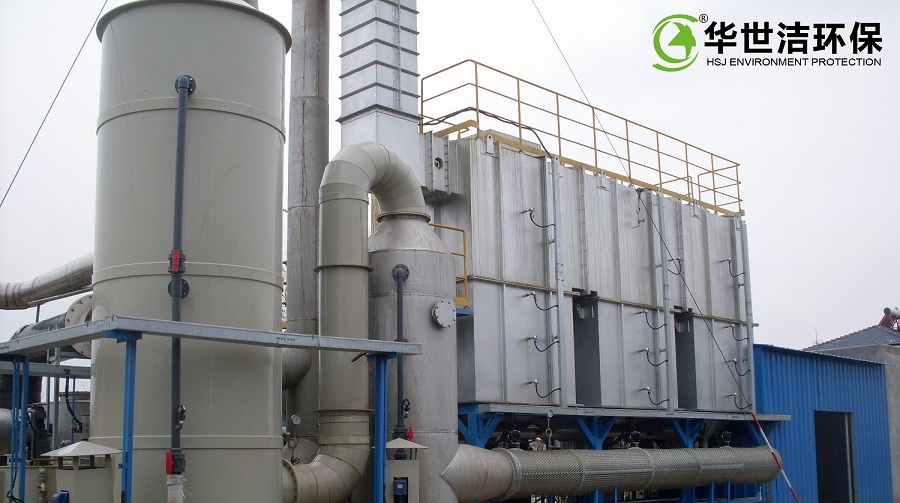
The zeolite rotating wheel adsorption-concentration catalytic combustion system belongs to the high-end equipment field. Based on the previous research and application, this system adopts rotating wheel adsorption-concentration and combines with regenerative catalytic combustion technology to control the pollution of large-volume, low-concentration organic waste gas. The overall process design principle is based on efficient adsorption and low-temperature catalytic oxidation, relying on the adsorption-concentration rotating wheel and regenerative catalytic oxidation devices respectively.
Firstly, the adsorption-concentration rotating wheel is the core equipment of the overall technology. This technical equipment uses zeolite adsorption-concentration rotating wheels, which have the following remarkable characteristics:
1. High performance and efficiency: Using hydrophobic molecular sieves with excellent adsorption performance as the adsorbent, it can provide sufficient performance support for a wide range of VOC types and different operating conditions.
2. Treatment of high-boiling-point solvents: Using hydrophobic zeolite molecular sieves, they can be regenerated at high temperatures due to their non-flammable and high-temperature-resistant properties.
3. Inertness: Even for VOCs with high thermal polymerization properties such as styrene and cyclohexanone, hydrophobic molecular sieves can be used for efficient treatment.
4. Cleaning and activation: The zeolite rotating wheel is formed by sintering at high temperatures, and it is an entirely inorganic combination. If the honeycomb passages are blocked, water washing can be performed.
5. Stability: During the operation of the rotating adsorption wheel, the adsorption and desorption processes are continuously carried out. The concentration fluctuation of the concentrated waste gas during desorption is small, avoiding the concentration fluctuation formed during the desorption of fixed adsorption beds, which is conducive to the stable and safe operation of the entire system and ensuring the stability of the heat output of subsequent treatment units.
Secondly, the regenerative catalytic combustion technology used in this technology also has outstanding features:
1. Stable catalytic bed temperature: A heat storage ceramic layer is set in the catalytic bed to reduce temperature fluctuations in the combustion chamber caused by changes in the heater and reactant concentration, improving catalyst activity and stability, extending the service life of the catalyst, reducing the amount of catalyst used; energy conservation and cost reduction, and improving the treatment effect of organic waste gas.
2. Energy recovery technology: The reaction tail gas and the incoming raw gas are heated and then the temperature is relatively low, which is a typical low-grade heat source. It is proposed to use new efficient heat exchange devices such as honeycomb-shaped full-effect heat exchangers to improve the level of residual heat utilization, further optimize the structure design of the CO system, and achieve standardized and modularized design.
2. Technical Advantages
This technology is suitable for continuous operation scenarios. The rotating adsorption structure has stable rotation speed, consistent adsorption and desorption air velocities, and operates continuously without any flow deviation. The desorption concentration is stable, and the purification efficiency is high. Compared with other domestic technologies, this technology has the following advantages:
① Using the modularized ceramic fiber paper-based zeolite honeycomb rotating wheel adsorption-concentration-rotating regenerative catalytic combustion coupling treatment technology, for large-volume, low-concentration organic waste gas, it first undergoes adsorption enrichment by zeolite, and then desorption by hot air on the zeolite adsorbent, forming a small-volume, high-concentration organic waste gas. It solves the forming technology of zeolite honeycomb rotating wheels based on ceramic fiber paper.
② Compared with direct catalytic combustion and thermal oxidation treatment technologies, this technology can save 60% or more of operating costs; it can make the reaction temperature more stable, and the catalyst service life is significantly improved. Compared with the adsorption process using activated carbon materials, this technology has higher VOCs treatment efficiency (>90%), good fire resistance, and the loading amount of zeolite can reach more than 40% by loading different surface properties and pore structures of zeolite.
③ Through processes such as forming with ceramic fiber corrugated sheets, impregnation with silica sol, drying, sintering, impregnation with zeolite, and activation, a zeolite honeycomb rotor for industrial VOCs treatment is prepared, addressing the current atmospheric environmental pollution problems caused by VOCs.
④ The adsorption, concentration and oxidation technology of the zeolite honeycomb rotor not only has an efficient VOCs removal effect and meets environmental protection emission requirements, but also recovers and utilizes the reaction heat through heat storage and heat exchange technologies, featuring outstanding energy-saving characteristics. It has broad market prospects and promotion value in the fields of large-volume, low-concentration industrial organic waste gas treatment in industries such as chemical engineering, spraying, chemical fibers, pharmaceuticals, automotive and shipbuilding.