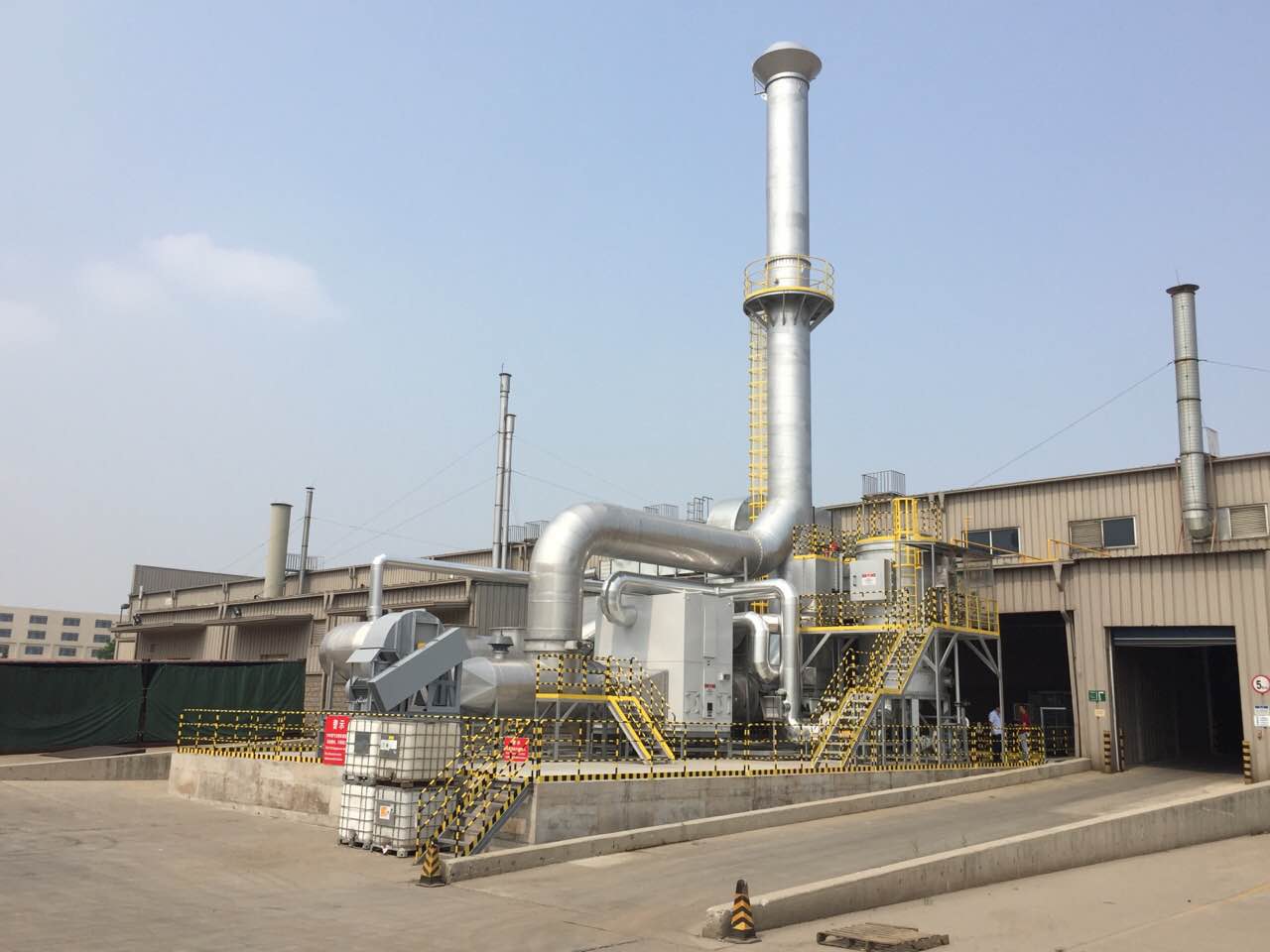
The environmental tax law has been released. The maximum charge for air pollution tax is 12 yuan per pollution equivalent.
On December 25, 2016, the Environmental Protection Tax Law of the People's Republic of China was approved and will come into effect on January 1, 2018. In this environmental protection tax, the tax amount for air pollution is 1.2 yuan to 12 yuan per pollution equivalent. The full text of the Environmental Protection Tax Law is attached below.
Xinhua News Agency, Beijing, December 25, 2016
Environmental Protection Tax Law of the People's Republic of China
(Adopted by the 12th National People's Congress Standing Committee on December 25, 2016)
Table of Contents
Chapter 1 General Provisions
Article 1 This Law is formulated to protect and improve the environment, reduce pollutant emissions, and promote ecological civilization construction.
Article 2 In the territory of the People's Republic of China and other sea areas under the jurisdiction of the People's Republic of China, enterprises, institutions, and other producers and operators that directly discharge taxable pollutants into the environment shall be taxpayers of the environmental protection tax and shall pay the environmental protection tax in accordance with this Law.
Article 3 The taxable pollutants referred to in this Law include air pollutants, water pollutants, solid waste, and noise as specified in the "Pollution Tax Item and Tax Rate Table" and the "Taxable Pollutants and Equivalent Value Table" attached to this Law.
Article 4 The following circumstances shall not be regarded as direct discharge of pollutants into the environment and shall not pay the corresponding environmental protection tax:
(1) Enterprises, institutions, and other producers and operators that discharge taxable pollutants to legally established centralized sewage treatment and garbage disposal facilities;
(2) Enterprises, institutions, and other producers and operators that store or dispose of solid waste at facilities or places that comply with national and local environmental protection standards.
Article 5 If an urban and rural sewage centralized treatment facility or a centralized garbage disposal facility exceeds the national and local emission standards and discharges taxable pollutants into the environment, it shall pay the environmental protection tax.
If enterprises, institutions, and other producers and operators store or dispose of solid waste in a manner that does not comply with national and local environmental protection standards, they shall also pay the environmental protection tax.
Article 6 The items and tax rates of the environmental protection tax shall be implemented in accordance with the "Pollution Tax Item and Tax Rate Table" attached to this Law.
The specific applicable tax rates for taxable air pollutants and water pollutants shall be determined and adjusted by the people's governments of provinces, autonomous regions, and municipalities directly under the Central Government, taking into account the environmental carrying capacity of the region, the current pollutant discharge status, and the requirements of the economic and ecological development goals, within the tax rate range specified in the "Pollution Tax Item and Tax Rate Table" attached to this Law, and submitted to the standing committee of the people's congress at the same level for decision, and filed with the Standing Committee of the National People's Congress and the State Council.
Chapter 2 Tax Calculation Basis and Tax Amount
Article 7 The tax calculation basis for taxable pollutants shall be determined in the following ways:
(1) For taxable air pollutants, the tax calculation basis is determined by the pollution equivalent number calculated based on the emission volume of the pollutants;
(2) For taxable water pollutants, the tax calculation basis is determined by the pollution equivalent number calculated based on the emission volume of the pollutants;
(3) For taxable solid waste, the tax calculation basis is determined by the emission volume of the solid waste;
(4) For taxable noise, the tax calculation basis is determined by the number of decibels exceeding the national standards.
Article 8 The pollution equivalent number of taxable air pollutants and water pollutants is calculated by dividing the emission volume of the pollutants by the pollution equivalent value of the pollutants. The specific pollution equivalent values for each taxable air pollutant and water pollutant shall be implemented in accordance with the "Taxable Pollutants and Equivalent Value Table" attached to this Law.
Article 9 For each discharge outlet or without a discharge outlet of taxable air pollutants, the environmental protection tax shall be levied on the top three pollutants based on the pollution equivalent number from largest to smallest.
For each taxable water pollutant with a discharge outlet, the environmental protection tax shall be levied on the first category of water pollutants based on the pollution equivalent number from largest to smallest, and on the other categories of water pollutants based on the top three pollutants.
The provincial, autonomous regional, and municipal people's governments may, based on the special needs of pollutant reduction in their respective regions, increase the number of taxable pollutants for environmental protection tax levied at the same discharge outlet, and report such decision to the standing committee of the same-level people's congress, and also report it to the Standing Committee of the National People's Congress and the State Council for record.
Article 10 The emission volume of taxable air pollutants, water pollutants, solid waste, and the decibel level of noise shall be calculated in accordance with the following methods and in the following order:
(1) If the taxpayer installs and uses automatic monitoring equipment that complies with national regulations and monitoring norms, the emission shall be calculated based on the automatic monitoring data;
(2) If the taxpayer does not install and use automatic monitoring equipment, the emission shall be calculated based on the monitoring data issued by a monitoring institution that complies with national regulations and monitoring norms;
(3) If there are no monitoring conditions due to the variety of pollutants emitted or other reasons, the emission shall be calculated based on the emission coefficient or material balance method prescribed by the State Environmental Protection Department;
(4) If the above methods cannot be used for calculation, the emission shall be calculated based on the sampling and estimation method prescribed by the environmental protection department of the provincial, autonomous regional, or municipal people's government.
Article 11 The amount of environmental protection tax payable shall be calculated in accordance with the following methods:
(1) The amount of environmental protection tax for taxable air pollutants shall be the product of the pollution equivalent number and the specific applicable tax rate;
(2) The amount of environmental protection tax for taxable water pollutants shall be the product of the pollution equivalent number and the specific applicable tax rate;
(3) The amount of environmental protection tax for taxable solid waste shall be the product of the solid waste emission volume and the specific applicable tax rate;
(4) The amount of environmental protection tax for taxable noise shall be the product of the decibel level exceeding the national standard and the specific applicable tax rate.
Chapter III Tax Exemptions and Reductions
Article 12 The following circumstances shall be exempted from environmental protection tax:
(1) The emission of taxable pollutants by agricultural production (excluding large-scale livestock farming);
(2) The emission of taxable pollutants by mobile pollution sources such as motor vehicles, railway locomotives, non-road mobile machinery, ships, and aircraft;
(3) The emission of corresponding taxable pollutants by urban and rural sewage centralized treatment and domestic waste centralized treatment facilities that do not exceed the national and local prescribed emission standards;
(4) The emission of taxable pollutants by taxpayers that are subject to comprehensive utilization of solid waste and meets the national and local environmental protection standards;
(5) Other circumstances exempted by the State Council.
The exemption provision in the fifth item shall be reported to the Standing Committee of the National People's Congress for record by the State Council.
Article 13 The taxpayers shall be levied environmental protection tax according to the provisions of the "Tax Collection and Administration Law of the People's Republic of China" and other relevant provisions. The environmental protection department shall be responsible for the monitoring and management of pollutants.
The local people's governments at the county level and above shall establish a working mechanism of division of labor and cooperation among tax authorities, environmental protection departments, and other relevant units, strengthen the management of environmental protection tax collection, and ensure that the tax is timely and fully remitted to the treasury.
Article 15 The environmental protection department and the tax authorities shall establish an information sharing platform for tax-related information and a working cooperation mechanism.
The environmental protection department shall regularly submit the environmental protection-related information of the polluting units, such as the pollutant discharge permit, pollutant emission data, environmental violations and penalties, etc., to the tax authorities.
The tax authority shall regularly submit to the environmental protection department the tax-related information of taxpayers, such as tax declaration, tax payment, tax reduction or exemption amount, outstanding tax payment, and risk points regarding environmental protection taxes.
Article 16 The time when the tax liability arises is the day when the taxable pollutants are emitted by the taxpayer.
Article 17 The taxpayer shall declare and pay the environmental protection tax to the tax authority at the place where the taxable pollutants are emitted.
Article 18 The environmental protection tax is calculated on a monthly basis and declared and paid on a quarterly basis. If it cannot be calculated and paid on a fixed period, it can be declared and paid on a per-occurrence basis.
When declaring and paying, the taxpayer shall submit to the tax authority the types and quantities of the taxable pollutants emitted, the concentration values of air pollutants and water pollutants, as well as other tax-related materials required by the tax authority based on actual needs.
Article 19 For taxpayers who declare and pay on a quarterly basis, they shall file a tax declaration and pay the tax within 15 days after the end of the quarter. For taxpayers who declare and pay on a per-occurrence basis, they shall file a tax declaration and pay the tax within 15 days after the occurrence of the tax liability.
The taxpayer shall truthfully file the tax declaration and be responsible for the authenticity and completeness of the declaration.
Article 20 The tax authority shall compare the taxpayer's tax declaration data with the relevant data submitted by the environmental protection department.
If the tax authority finds that the taxpayer's tax declaration data is abnormal or the taxpayer fails to file a tax declaration within the prescribed time, it may request the environmental protection department to conduct a review. The environmental protection department shall issue a review opinion within 15 days after receiving the data from the tax authority. The tax authority shall adjust the taxpayer's taxable amount based on the reviewed data from the environmental protection department.
Article 21 If the pollutant emission quantity is calculated and determined by reference to Article 10, item 4 of this Law, the tax authority and the environmental protection department, as well as the staff of the tax authority and the environmental protection department, shall jointly determine the types, quantities and taxable amount of pollutants based on the data reviewed by the environmental protection department.
Article 22 The specific methods for taxpayers to declare and pay the environmental protection tax when conducting marine engineering and discharging taxable air pollutants, water pollutants or solid waste into the waters under the jurisdiction of the People's Republic of China shall be stipulated by the State Taxation Administration and the State Oceanic Administration.
Article 23 If a taxpayer and the tax authority, or the environmental protection department and its staff violate the provisions of this Law, they shall be held legally responsible in accordance with the provisions of the "Tax Collection and Administration Law of the People's Republic of China", the "Environmental Protection Law of the People's Republic of China" and other relevant laws and regulations.
Article 24 The people's governments at all levels shall encourage taxpayers to increase investment in environmental protection construction and provide financial and policy support for taxpayers' investments in automatic monitoring equipment for pollutants.
Chapter V Supplementary Provisions
Article 25 The meanings of the following terms in this Law are as follows:
(1) Pollution equivalent: It refers to a comprehensive indicator or unit for measuring the environmental pollution caused by different pollutants or pollution emission activities based on their harmfulness to the environment and the technical and economic feasibility of treatment. The same type of pollutants with the same pollution equivalent have basically the same degree of pollution in the same medium.
(2) Emission coefficient: It refers to the average value of the amount of pollutants emitted per unit of product under normal technical, economic and management conditions.
(3) Material balance calculation: It refers to a method of calculating and estimating the use of raw materials, products and waste generated in the production process based on the principle of mass conservation.
Article 27 From the date of implementation of this law, environmental protection taxes shall be levied in accordance with the provisions of this law, and the collection of pollutant discharge fees shall be discontinued.
Article 28 This law shall come into effect as of January 1, 2018.