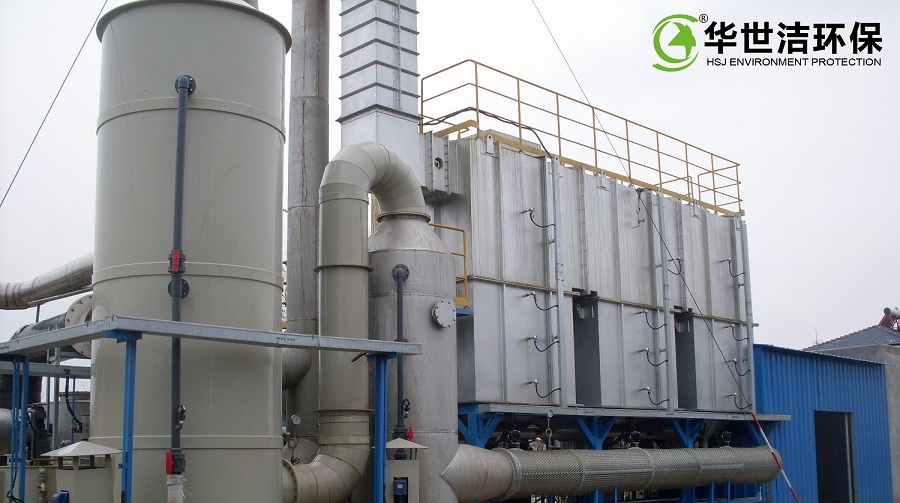
Introduction to the Process of Adsorption Concentration by Zeolite Molecular Sieves Wheel + Thermal Oxidation for VOC Treatment
The promulgation of new environmental protection regulations has imposed increasingly strict requirements on the emission limits of VOC organic waste gases. More and more VOC purification treatment projects with large air volume, low concentration, and complex components are facing the dilemma of high initial investment and high operating costs. Therefore, the adsorption-concentration + thermal oxidation combined VOC treatment process is suitable for solving such VOC purification problems.
Compared with the adsorption-concentration of honeycomb activated carbon, zeolite molecular sieve rotors have many advantages, such as safety factors, continuous operation, and smaller concentration fluctuations after desorption. Zeolite molecular sieve rotors are increasingly becoming the mainstream treatment process and equipment for such projects.
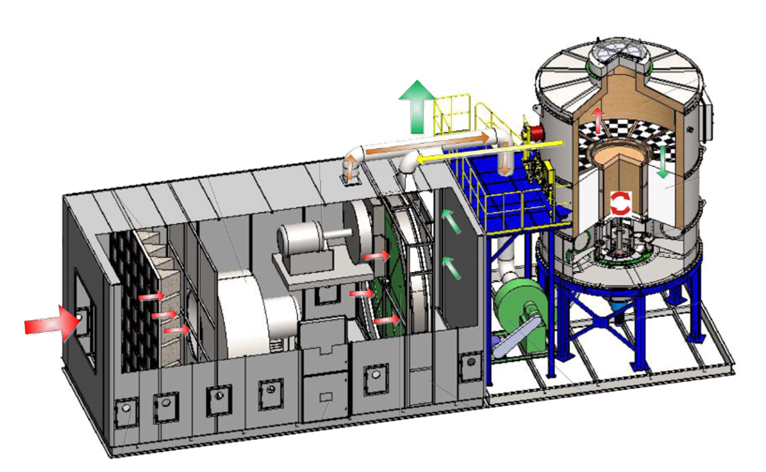
The adsorption-concentration and catalytic combustion waste gas treatment system using zeolite molecular sieve rotor adsorption + catalytic combustion is a system that utilizes three continuous temperature-changing adsorption and desorption procedures to concentrate low-concentration, large-air-volume organic waste gases into high-concentration, small-flow concentrated gases. Its device characteristics are suitable for processing large-flow, low-concentration, and multi-organic-component waste gases.
The sealing system of the zeolite molecular sieve rotor adsorption is divided into the treatment area and the regeneration area. The adsorption rotor rotates slowly to ensure a continuous process of adsorption. When waste gas containing volatile organic compounds (VOCs) passes through the treatment area of the rotor, the waste gas components are adsorbed by the adsorbent in the rotor, and the rotor gradually becomes saturated. The treated waste gas is purified and discharged. At the same time, in the regeneration area, hot air passes through the adsorbed saturated rotor, causing the adsorbed waste gas to be desorbed and carried away by the hot air, thereby restoring the rotor's adsorption capacity and achieving the effect of continuous VOC removal while also increasing the waste gas concentration, facilitating catalytic oxidation treatment. The hot desorption hot air (~220℃) comes from the hot smoke gas generated in the catalytic combustion chamber. Before the concentrated waste gas from desorption enters the catalytic bed, it first undergoes heat exchange with the hot smoke gas in the heat exchange unit, preheats the desorbed waste gas and enters the catalytic bed. The desorbed gas rises to 300℃ in the catalytic bed for catalytic oxidation reaction, where the organic components are oxidized into harmless CO2 and H2O, and heat is released. The formed gas (<650℃) is exchanged with the inlet gas before being discharged directly into the chimney or diverted for desorption hot air. The continuous operation of the slow rotation of the zeolite molecular sieve rotor can well adapt to continuous and intermittent operation conditions.
The purification system of the zeolite molecular sieve rotor adsorption-concentration + catalytic combustion waste gas treatment system adopts fully automatic control. When problems occur in the operation, the system automatically alarms and shuts down, which is convenient for management, saves manpower, is easy to operate, and is safe and reliable.