Analysis of the VOCs Pollution Control Market in Atmospheric Pollution in 2016
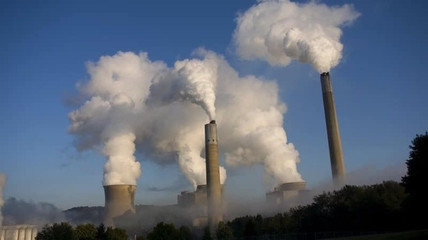
At present, China's VOCs (volatile organic compounds) emissions rank first in the world and are increasing year by year. VOCs, which are important precursors for ozone and fine particulate matter (PM2.5), have seriously threatened human health and the development of the environment. The following is an analysis of the VOCs pollution control market in 2016.
Introduction to the VOCs Pollution Control Market in the Atmosphere:
There are numerous types of VOCs, with a wide range of sources and complex compositions. Commonly, there are hydrocarbons, alcohols, ethers, esters, etc. Industries such as gas stations, decoration, catering, dry cleaning, spraying, and chemical production or use of organic solvents all produce VOCs emissions. Even for the same substance, due to different air flow rates and concentrations, the required technical routes are also different. This also determines that no single technology can solve all VOCs problems. For example, the pharmaceutical industry, which is a key industry for VOCs emissions, has gathered a large number of pharmaceutical industrial parks in places like Taizhou and Shangyu in Zhejiang Province. Each pharmaceutical factory has its unique process and requirements, and the required technical routes and solutions are also different.
The scope of VOCs emissions is wide, including industries such as chemicals, medicine, catering, dry cleaning, etc. The governance work requires multi-departmental coordination and cooperation. VOCs prevention and control is also a complex project. Due to the different types of VOCs from various industries, their compositions are also different, and the monitoring methods, monitoring standards, and treatment technologies used are also different. Currently, there are still many VOCs substances that have not been included in the environmental protection vision, and there is a lack of mature standards, regulations, and methods on this issue.
There are dozens of VOCs treatment methods, and their principles mainly include two categories: the recovery technology for valuable solvents and the destruction technology for VOCs molecules. In practical applications, more often, combined technologies are adopted. For example: using a combination of concentration and combustion technology to treat low-concentration and high-airflow-rate exhaust gases, reducing investment in equipment; using catalytic combustion (CO) or regenerative thermal oxidation (RTO) technology to achieve thorough treatment of VOCs under low energy consumption; based on the solubility, boiling point, etc. of VOCs, choosing variable-temperature adsorption or variable-pressure adsorption for solvent recovery, and how to choose depends on the production line conditions of the customer.
Policy Analysis of the VOCs Pollution Control Market in 2016: The "Air Pollution Prevention and Control Law" Imposes "Strict Restrictions" on Enterprises
VOCs pollution control has always been a key and difficult point in China's air pollution prevention and control. In recent years, China has successively introduced a number of policies and regulations to assist in VOCs pollution control. The newly issued "Air Pollution Prevention and Control Law" has for the first time included VOCs under supervision.
The latest revision, known as the strictest "Air Pollution Prevention and Control Law", came into effect on January 1, 2016. Compared with 15 years ago, the new law has doubled the number of articles, clarified government responsibilities, raised requirements for enterprises and penalty standards, and required public reporting channels. Experts believe that the new "Air Pollution Prevention and Control Law" is highly operational and targeted, and for the first time includes volatile organic compounds (VOCs) under supervision, imposing "tight restrictions" on enterprises.
In response to the new "Air Pollution Prevention and Control Law" including VOCs under supervision for the first time, a relevant official from the China Environmental Protection Industry Association's Exhaust Purification Committee said that this provides legal basis for VOCs pollution control and will have a significant impact on VOCs pollution control. And on October 1, 2016, the pilot program for VOCs discharge fees was launched, covering the petrochemical industry and packaging printing industry. The official disclosed that the next step will be to increase the intensity of VOCs pollution control.
From the new "Air Pollution Prevention and Control Law", the relevant provisions of the second section "Industrial Pollution Prevention" state: "For enterprises in industries such as steel, building materials, non-ferrous metals, petroleum, and chemicals that emit dust, sulfur compounds, and nitrogen oxides during production, they should adopt clean production processes, build dust removal, desulfurization, and denitrification facilities, or take other measures such as technological transformation to control the emission of air pollutants." Article 45 stipulates: "For production and service activities that generate volatile organic compounds (VOCs) waste gas, they should be carried out in enclosed spaces or equipment, and污染防治 facilities should be installed and used in accordance with regulations; if it is impossible to be enclosed, measures should be taken to reduce the emission of waste gas." In addition, the prevention and control law also stipulates that industrial coating enterprises and enterprises that produce and use organic solvents should take measures to promptly collect and treat related pollutants.
The current status of VOCs pollution emissions in 2016: The printing industry ranks first among industries with VOCs pollution emissions.
It is known that among industries with VOCs pollution emissions, the printing industry ranks first, and among them, packaging printing is the most severely affected area. Packaging printing, as a branch of the printing industry, accounts for about 30% of the entire printing industry's output value, but the VOCs emissions account for 80% of the entire industry.
A person in charge of the packaging printing industry stated that if a production line with an annual output of 50 million yuan (two lines) is taken as a standard, 230 tons of solvents are needed per year, and the solvents in ink are also included. Estimating that about 1.2 kilograms of VOCs are emitted per hour for each color process, approximately 300 to 400 tons of VOCs are emitted into the atmosphere each year. And the national conservative statistics show that there are 15,000 production lines, and the pollution caused by VOCs emissions is not negligible.
According to a relevant official from the Pollution Prevention Department of the Ministry of Environmental Protection, the current status of the national air environment shows that 70% of the 330 prefecture-level cities do not meet the national emission standards. To achieve blue skies and white clouds, 60% of the emissions need to be reduced. The national VOCs emissions alone are as high as 25 to 30 million tons, and the difficulty of the prevention and control task is unimaginable.
The demand for VOCs pollution control in 2016: Urgent necessity
The VOCs emission volume is so large, and its control has reached an urgent necessity. For enterprises that do not handle and exceed the emission standards, the newly revised "Air Pollution Prevention and Control Law" proposes a daily penalty method. Currently, relevant departments are formulating air pollution emission standards, and will put forward more stringent requirements for air quality standards, emission standards, and penalty standards, etc.
At the same time, the pollution discharge fee for VOCs will also be included in the collection scope. At that time, the collection standard of the pollution discharge fee will be significantly increased. Currently, the preliminary proposed pollution discharge fee is 1.2 yuan per kilogram, but Beijing and Tianjin will increase the collection standard by 10 times, reaching 10-20-40 yuan per kilogram. Among them, the pollution discharge fee collection standard in Jiangsu is 3.6 yuan per kilogram, which is three times the standard. According to relevant regulations, starting from October 2015, it will be implemented on a half-year cycle for charging. For enterprises that do not handle or do not meet the standards for treatment, the daily penalty can be as high as 200,000 yuan per day. That is to say, the penalty cost will be higher than the treatment cost, and if the enterprises do not make up their minds to treat, it will be difficult for them to survive.
Summary:
A comprehensive analysis of the atmospheric pollution control industry from 2016 to 2021, along with the guidance report on the "13th Five-Year Plan" for the development of this industry. In China, the VOCs control began relatively late, so the current effectiveness of VOCs control is not obvious. However, as the policies continue to be implemented and the control efforts keep strengthening, the demand for the VOCs control industry in the future will undoubtedly become increasingly urgent.