The treatment methods for organic waste gas in the tire production process
The automotive industry has experienced rapid development, and the tire production industry has also entered the "fast lane". Among them, the organic waste gas generated during the tire production process has increasingly attracted people's attention. The problem of organic waste gas treatment has become a key challenge for enterprises to meet environmental emission standards. The treatment of volatile organic compounds (VOCs) in the waste gas is particularly difficult. This article introduces several methods for treating organic waste gas, including traditional techniques and modern methods. The advantages and disadvantages of the methods are elaborated, and the future directions and processes for treating organic waste gas are also presented.
After China's reform and opening up, with economic development entering the "fast lane", cars gradually became common in ordinary households. The strong demand for purchasing cars from the public was significant. By the end of 2014, the number of motor vehicles in China reached 264 million. The tire production industry, which is related to this, has also developed rapidly. People have increasingly paid attention to the treatment of waste gas generated during tire production.
The tire production process mainly includes processes such as rubber mixing and compounding, bead manufacturing, fabric coating and pressing, tire molding, and tire vulcanization. These processes mainly produce organic waste gas containing dust, sulfides, and volatile organic compounds (VOCs), along with a foul odor. This article mainly introduces the methods for treating organic waste gas during tire production.
1. Adsorption Method
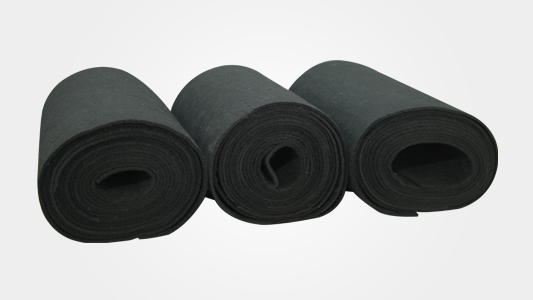
The activated carbon adsorption method is an effective way to treat low-concentration volatile organic compounds. Currently, commonly used methods include granular activated carbon, powdered activated carbon, and activated carbon fibers. Before use, these materials are treated to generate dense, microscopic pores that cannot be identified by the naked eye. Therefore, they have a large specific surface area. These pores interact with gas molecules through intermolecular forces, allowing the organic waste gas to be adsorbed, achieving the goal of treating organic waste gas. The activated carbon adsorption method is one of the earliest technologies applied to the treatment of organic waste gas. It is simple and practical, has a mature process, high treatment efficiency, and significant odor removal. However, it has disadvantages such as large equipment, complex process, and being prone to blockage by dust and rubber particles generated during tire production.
2. Absorption Method
Absorption methods are divided into physical absorption methods and chemical absorption methods based on different absorption processes. Organic waste gas is introduced into the absorption liquid, and the principle of similarity and compatibility between the two is utilized for absorption and purification. However, due to the ease of saturation of the absorption liquid, the treatment efficiency is relatively low. Therefore, it is rarely used alone and is more often used as a pre-treatment method combined with other methods.
3. Combustion Method
Combustion methods can be classified into direct combustion methods and catalytic combustion methods based on different operation processes. Direct combustion involves allowing high-concentration and low-volume organic waste gas to burn directly or with assistance in the gas flow, oxidizing the organic compounds in the waste gas into carbon dioxide and water. However, for waste gas with low concentration and lacking fuel, direct combustion is difficult. Catalytic combustion is a method where the combustible components in the waste gas are completely oxidized and decomposed at a lower temperature under the action of a noble metal catalyst, transition metal oxide catalyst, or complex oxide catalyst, releasing a large amount of heat, thereby purifying and treating the organic waste gas. Combustion can effectively remove volatile organic compounds and reduce odors, but the catalytic combustion method has strict process requirements and cannot contain particles or droplets that affect the catalyst's lifespan and efficiency, or substances that cause catalyst poisoning.
4. Condensation Method
The condensation method utilizes the characteristic that organic compounds have different saturated vapor pressures at different temperatures. It uses methods such as lowering temperature or increasing pressure to cause gaseous organic pollutants to condense and be separated from the waste gas. To achieve a higher recovery rate, methods such as cooling or pressurization are used, which results in higher operating costs and greater energy consumption. Therefore, this method is often combined with compression, adsorption, and absorption processes to recover products with potential use value.
5. Photocatalytic Oxidation Method
Photocatalytic oxidation method utilizes the photocatalytic activity of catalysts such as TiO2, and irradiates them with light of a certain wavelength to cause a series of complex oxidation-reduction reactions on the surface of the catalysts, thereby degrading volatile organic compounds into carbon dioxide, water, and inorganic small molecule substances. This method has the advantages of high reaction efficiency, no need for heating or pressurization during the reaction, selectivity in removing pollutants, and low energy consumption. However, this technology is currently limited to laboratory reaction systems and has not yet been applied in large-scale industrial production.
6 Low-temperature plasma method
The low-temperature plasma method utilizes the high-energy particles generated by the breakdown of gas under the action of an external voltage to react with pollutant molecules, causing a series of complex plasma physical and chemical reactions, and decomposing the pollutant molecules, thereby degrading organic pollutants into harmless substances. Compared with conventional technologies, the low-temperature plasma method has the advantages of reaction at normal temperature and pressure, simple process, simple operation procedures, and effective treatment of low-concentration organic waste gas. However, due to the high initial investment, this technology has not been effectively promoted yet.
7 Membrane separation method
The membrane separation method utilizes the principle that different components of the gas pass through the semi-permeable polymer polymer membrane at different speeds, allowing organic waste gas to pass through the membrane, while organic components and air molecules can be separated due to their different permeability to the membrane. This method is suitable for the separation and recovery treatment of high-concentration organic waste gas, and has the advantages of simple method, low energy consumption, and no secondary pollution.
8 Biotechnology
Biotechnology utilizes microorganisms to use the organic components in the organic waste gas as energy and nutrients, and undergoes a complex metabolic degradation process to decompose the organic pollutants into carbon dioxide, water, and cell components. The process is complex and can be divided into three stages: ① Utilizing the concentration gradient of organic substances between the gas and liquid phases, the water solubility of organic substances, and the adsorption of microorganisms, the pollutants are transferred from the gas phase to the liquid phase (solid surface liquid film); ② The pollutants diffuse and flow from the liquid film surface into the biological film; ③ Microorganisms oxidize and decompose the pollutants.
Biotechnology has the characteristics of large treatment capacity, low energy consumption, good purification effect, and good treatment effect for low-concentration organic waste gas. The main treatment devices in domestic and foreign applications are biological filters, biological drip filters, and biological scrubbers.
8.1 Biological filter
The organic waste gas that has been moistened in the nutrient solution is introduced into the biological filter, where there are adsorptive packing materials carrying microorganisms. The organic pollutants transfer from the gas phase to the biological layer, and the artificially selected microorganisms utilize the organic components in the organic waste gas as carbon sources for physiological metabolic activities, thereby eliminating the degradation of organic components. The packing layer can be composed of materials with good air permeability such as soil, plastic particles, activated carbon particles, ceramic filter materials, and wood chips, and has a large gas capacity, which can effectively treat low-concentration organic waste gas. The biological filter is a mature waste gas biological treatment technology that is currently well studied and applied. It has a simple structure, low investment cost, and many industrial application cases. However, its disadvantage is that the equipment occupies a large space and requires regular replacement of the packing materials.
8.2 Biological drip filter
The working principle and structure of the biological drip filter are similar to those of the biological filter. The main difference is that the biological drip filter circulates the sprayed bottom leakage liquid from the top, and the waste gas enters from the bottom and gradually rises, passing through the packing layer, flowing with the downward or upward flow of the leaking liquid, and the organic components are transferred to the liquid film surface of the biological surface in the packing layer and are degraded by the microorganisms in the biological membrane. The carbon dioxide gas and other substances produced flow in the opposite direction to the outside and are finally discharged from the drip filter. The bacterial products and acidic substances produced can be carried by water to the bottom leakage liquid, overcoming the problem of the treatment efficiency decreasing with the decrease of pH value. The disadvantage is that the equipment and operation are more complex, and it is not suitable for treating compounds with poor water solubility. It requires strict control of the addition of nutrient solution to prevent excessive microbial reproduction.
8.3 Biological scrubber
The biological scrubber is completely different from the biological filter and the trickle filter. It is a suspended activated sludge treatment equipment, consisting of a scrubber unit with fillers and a biological reactor unit with activated sludge... In the first reactor unit, the main process is physical dissolution, and the exhaust gas is converted from gaseous to liquid. The liquid pollutants enter the second unit, and in the biological reactor, they are degraded through the metabolic action of the activated sludge. This equipment has easy control of reaction conditions, non-clogging of the fillers, and low pressure. The disadvantage is that an external nutrient solution is required, and the equipment is numerous and the cost is high. It is difficult to control the growth activity of the liquid phase, so it is not as widely used as the previous two types of equipment.
9 Conclusion
Based on the introduction of the above technologies, in terms of improving the removal rate, saving costs, and operating in a green manner, in-depth research should be conducted on traditional treatment technologies for tire organic waste gas. New technologies are also emerging one after another, but there are few cases of large-scale adoption of new technologies. There are problems such as difficulty in industrialization application, complex gas components reducing the removal rate. In the next step, we can focus on the direction of process combination, and scientifically combine and optimize two or three processes to leverage the advantages of each process, efficiently and cost-effectively remove the organic waste gas from the tire production process, protect the human living environment, and maintain the stability of the ecological environment.