03 Article - Napotec® | Overview of Molecular Sieve Wheel Development
Global supplier of environmental protection equipment and core materials, Qingdao Nabok Environmental Technology Co., Ltd., has achieved international advanced levels in VOCs treatment technology and product performance. The first domestic molecular sieve adsorption-concentration rotor is a technological achievement. This technology provides clean and comfortable air for people's lives! Now, we are launching "Le Zan VOCs", regularly sharing VOCs treatment technology, international environmental protection trends, customer cases, and the joys and hardships of environmentalists with everyone. We hope to share a happy and environmentally friendly life with you.
Whether you are a research institute, environmental protection enterprise, engineering company, an enterprise or individual with the aspiration for environmental protection, we sincerely invite you to join the Nabok Club to share research results, jointly undertake the responsibility of VOCs treatment, and protect the same blue sky.
Development history of molecular sieve rotors
Molecular sieve adsorption rotor concentrator ZCR (Zeolite Concentrator Rotor) was developed in the late 1970s. It is a rotating adsorption equipment made by attaching molecular sieve adsorption materials to honeycomb-shaped porous carriers.
The first Swedish patent involved molecular sieve rotors in 1974.
In 1988, Japan's Western Technology Research Corporation was the first to develop molecular sieve rotors for industrial VOCs treatment. In addition, the related products of Japan's Nijagashi Company also represent the current world's advanced level.
The application of molecular sieve rotors in China began in the late 1990s, and then a few devices were introduced from abroad. However, the price was relatively high, which affected their large-scale application. Therefore, our company began to independently develop molecular sieve rotors in 2002, and in March 2014, we produced the first domestic molecular sieve rotor product.
Research and development process of Napotec® molecular sieve rotors
2002: Start of molecular sieve rotor research
2007: Successful development of pilot equipment for honeycomb corrugated processing
2011: Key technologies breakthrough in ceramic fiber paper
2013: Huashi Jie established the first molecular sieve rotor production line
2014: Domestic first molecular sieve rotor product
Patents owned by Napotec® in molecular sieve rotors
F150603 Preparation method of a molecular sieve composite fiber profile
F150604 Preparation method of a molecular sieve adsorption profile
F150600 Preparation method of a ceramic fiber-based catalyst carrier and its production
F150606 Dual-function adsorption rotor for dehumidification and VOCs removal and its preparation
F150602 Molecular sieve adsorption-concentration rotor with activated carbon material doping and its preparation
◎ CN201110408981 Dual-function adsorption rotor for dehumidification and VOCs removal
◎ CN201210014886 Preparation method of high thermal conductivity corrugated ceramic fiber paper
◎ CN201310303172 Mobile integrated organic waste gas treatment device
◎ CN201320511042 Mobile integrated organic waste gas treatment device
◎ CN201510778204 Dual-function adsorption rotor for dehumidification and VOCs removal
◎ CN201510778284 Preparation method of ceramic fiber-based catalyst carrier and its production
◎ CN201520091571 Waste gas treatment device for adsorption and concentration
◎ CN201520093082 Pulse-type rotating device for adsorption and concentration of organic waste gas
◎ CN201520093083 Horizontal rotating device for adsorption and concentration of organic waste gas
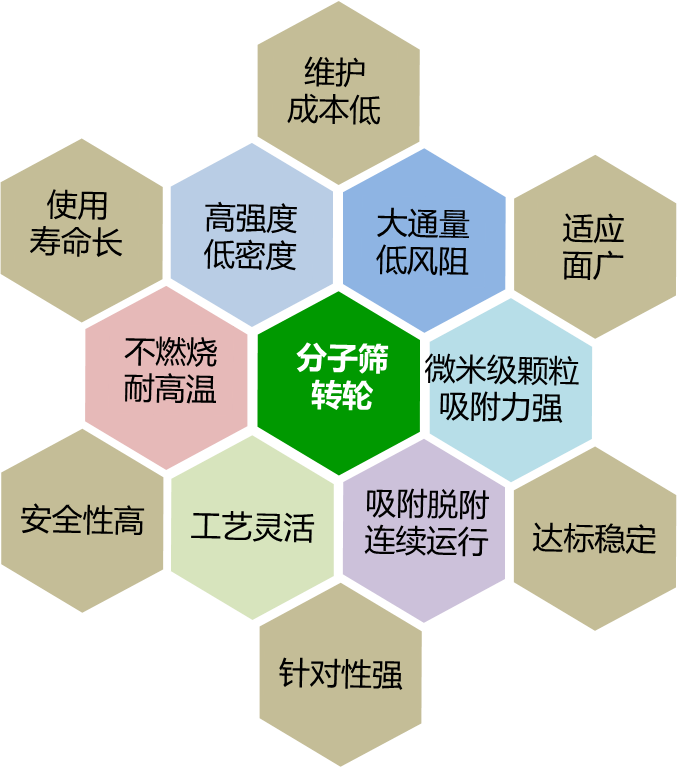
Characteristics of Napotec® produced molecular sieve rotors
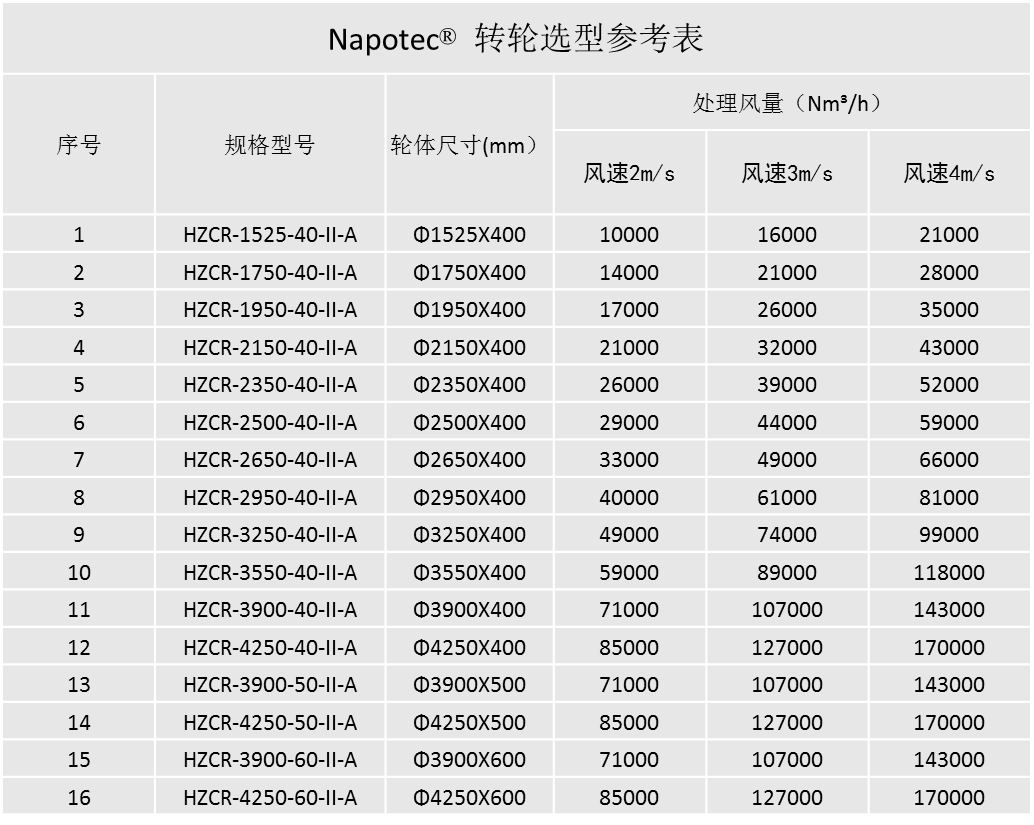
Napotec® Molecular Sieve Wheel Selection Chart
We offer 5 types, 11 diameters, and 3 thicknesses of molecular sieves, allowing for selection based on different operating conditions.
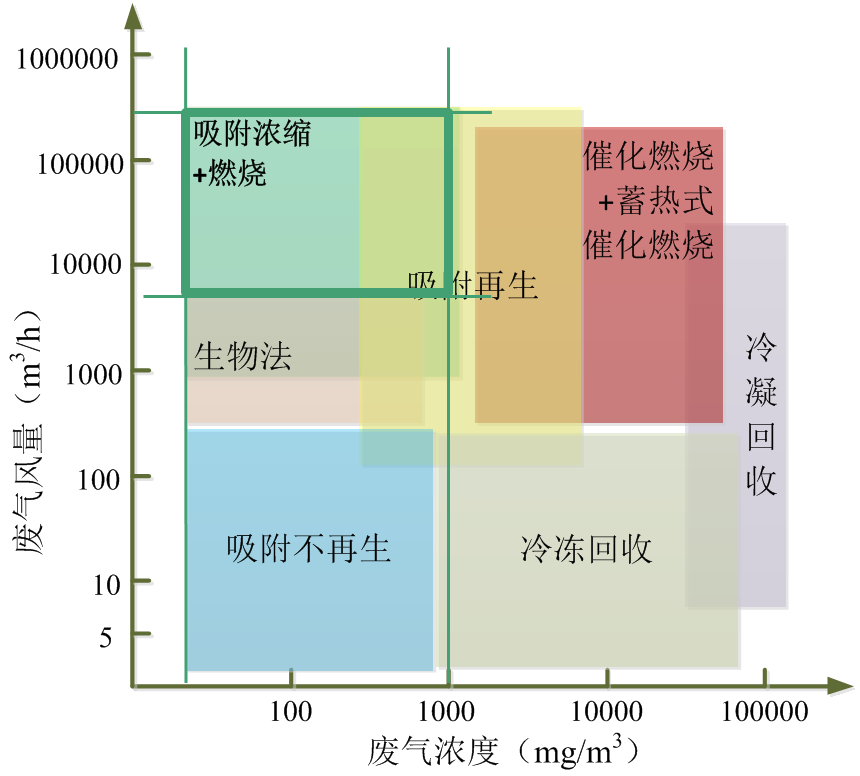
Selection of the combined process of molecular sieve adsorption concentration and thermal oxidation
The VOCs components generated under different industries and working conditions vary, and different treatment methods are required accordingly. Depending on the properties of the components and the working conditions, for large flow rates (>10,000 m3/h) and low concentrations (<1000 mg/m3), the combined process of adsorption concentration and thermal oxidation is suitable.
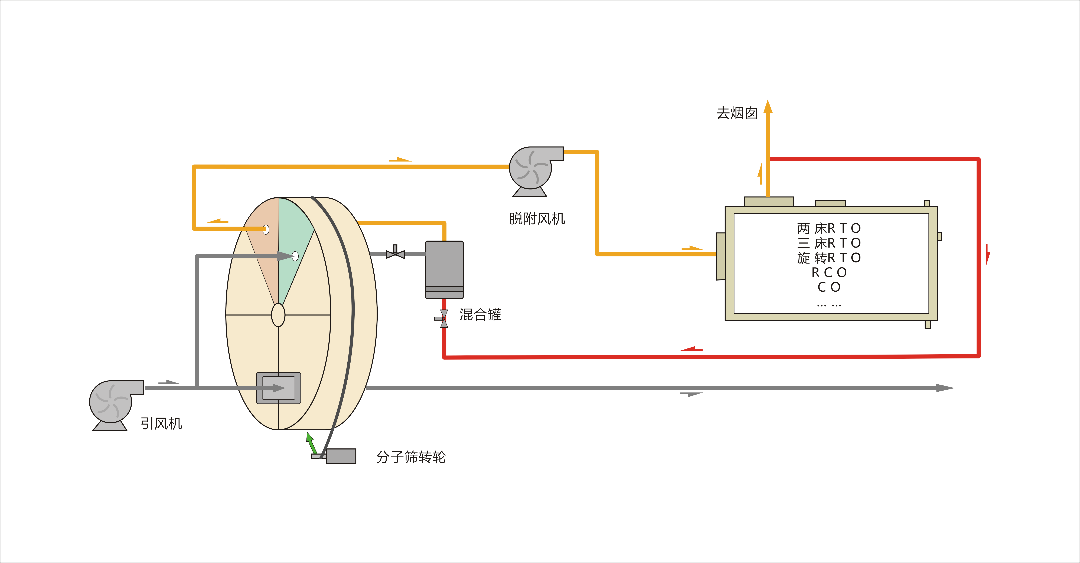
Advantages of the molecular sieve adsorption concentration + thermal oxidation combined process:
1. Conversion from high airflow to low airflow → Miniaturization of the combustion device
2. Conversion from low concentration to high concentration → Energy savings in operation