04 Article - Napotec® | Molecular Sieve Adsorption Concentration + Thermal Oxidation Combined Process
Global supplier of environmental protection equipment and core materials, Qingdao Nabok Environmental Technology Co., Ltd., has achieved international advanced levels in VOCs treatment technology and product performance. The first domestic molecular sieve adsorption concentration rotary wheel is a technological achievement that provides clean and comfortable air for people's lives! Now, we are launching "Le Zan VOCs", regularly sharing VOCs treatment technology, international environmental protection dynamics, customer cases, and the joys and hardships of environmentalists with everyone. We hope to share a happy and environmentally friendly life with you.
Whether you are a research institute, environmental protection enterprise, engineering company, an enterprise or individual with a commitment to environmental protection, we sincerely invite you to join the Nabok Club to share research results, jointly undertake the responsibility of VOCs treatment, and protect the same blue sky.
Brief description of VOCs treatment process
The VOCs components produced under different industries and working conditions are different, and different requirements are put forward for treatment methods. According to the different properties of the components and working conditions, for large air volumes (>10,000 m3/h) and low concentrations (<1,000 mg/m3), it is suitable to choose the molecular sieve adsorption concentration rotary wheel + oxidation unit combined treatment process, which can achieve a VOCs removal rate of over 95%. The principle diagram is shown in Figure 1 below:
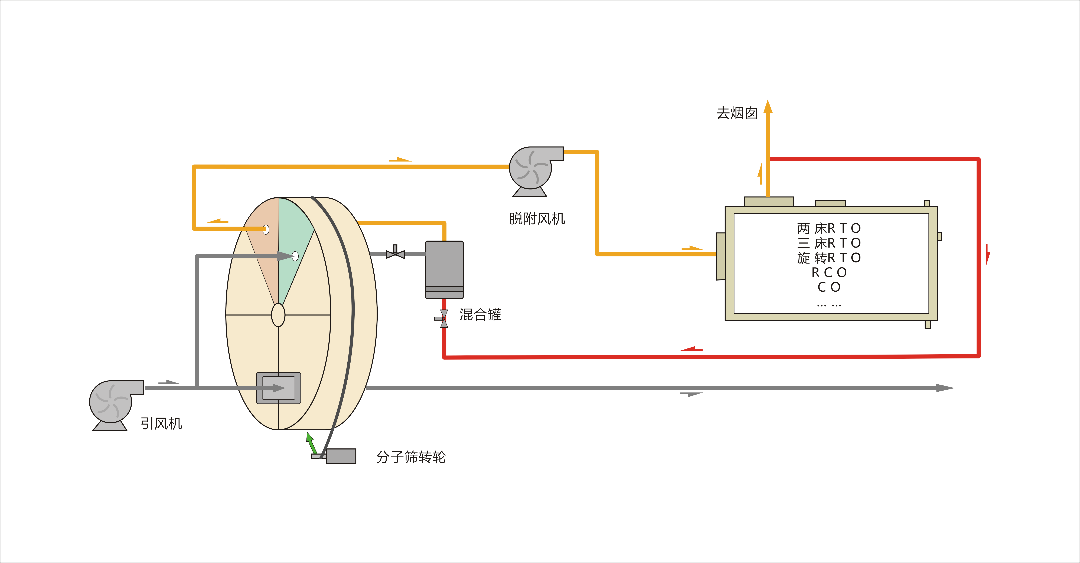
Figure-1 Combined Process Diagram of Napotec® Molecular Sieve Wheel + Oxidation Unit
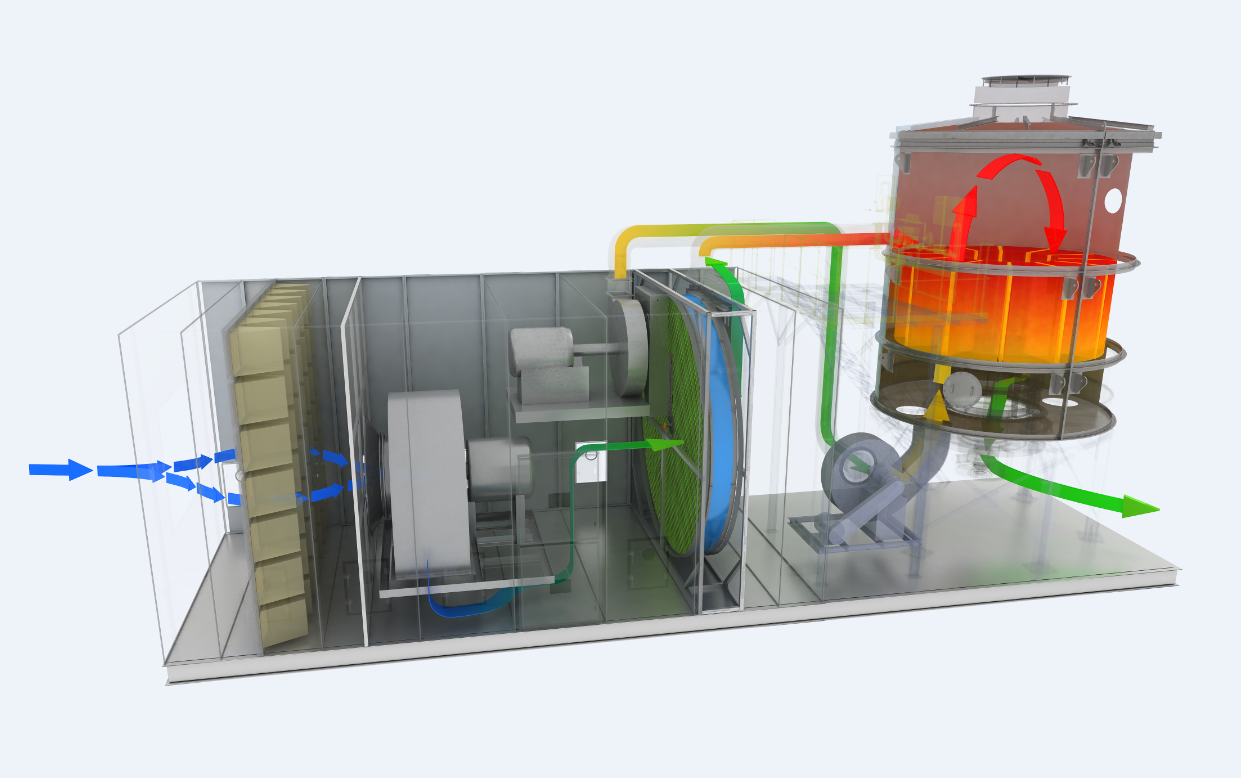
After the VOCs exhaust gas is pre-treated by multiple filtration devices, it enters the adsorption area of the molecular sieve wheel for adsorption. The clean gas after molecular sieve adsorption purification is directly discharged into the atmosphere through the chimney; before the molecular sieve in the adsorption area reaches the saturation point, the wheel rotates to the desorption area. Using high-temperature hot air (180~220℃) for desorption and concentration (transforming large flow into small flow, and low concentration into high concentration), the desorbed molecular sieve wheel enters the cooling and regeneration area, and is cooled and regenerated by cold air or cold exhaust gas. The regenerated molecular sieve wheel rotates to the adsorption area again, continuously adsorbing VOCs exhaust gas, and this process repeats continuously and is in a continuous operation state.
The concentrated organic waste gas after desorption is pumped by the oxidation fan to the thermal oxidation furnace for combustion, converting it into non-polluting carbon dioxide and water vapor and discharging it into the atmosphere. Generally, the commonly used oxidation units with the molecular sieve wheel include regenerative thermal oxidation (RTO) and catalytic oxidation (CO), and are selected according to different working conditions. The heat released during the thermal oxidation of VOCs in the combustion chamber is partially used to maintain its own operation, and if there is excess heat available for use in desorption or preheating recovery, it can be used, for example, in heat transfer oil boilers or waste heat steam boilers, maximizing energy conservation.
Application of Molecular Sieve Wheel Industry
The main application of the molecular sieve adsorption and concentration system is to treat the exhaust gas from various spray painting workshops (automobile manufacturing, shipbuilding, bicycle manufacturing, aircraft manufacturing, metal products, etc.), various printing workshops (intaglio printing, building decoration material printing, other various printing processes), exhaust gas from aluminum profile production, coating processing, etc., exhaust gas from various electronic product manufacturing processes, semiconductor integrated circuits, liquid crystal display (LCD) manufacturing processes, lithium-ion battery manufacturing (electrode formation process, electrolyte filling process) processes, exhaust gas from the production processes of resin, rubber, tires, etc., and exhaust gas from scattered sources of volatile organic compounds in automotive repair shops, clothing dry cleaning shops, etc.
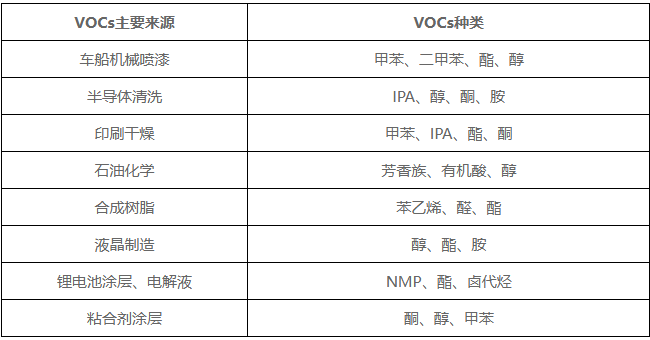
The following are the main VOCs components in the application industries, please refer to Table-2:
Table-2 Main Sources and Components of VOCs
Editor's Note: Since the launch of the Naboko WeChat official account, the articles currently shared mainly pertain to the molecular sieve rotary wheel series. So, in the coming period, the editor plans to share different types of oxidation devices that are combined with molecular sieves. Please stay tuned...