【Original】The Current Status and Development Trends of Zeolite Wheel Technology Research at Home and Abroad
【Explanation】This article is original work by Naboko. Please cite the source when reusing.
1. Current Situation and Trends of Foreign Technologies
Since the 1960s, the application of adsorption enrichment - desorption concentration - regenerative catalytic oxidation post-treatment technology has emerged in countries such as Europe and America. Companies like Dürr in Germany, Megtec and Enguil in the United States, and Biothermica in Canada have occupied the majority of the market in the industry. As the core material of the overall technology, the improvement of adsorbent quality and the improvement of its utilization methods have significantly contributed to the enhancement of waste gas treatment levels. The Swede Carl Munters innovatively proposed the concept of using adsorption materials in the form of a honeycomb structure as a rotor for the separation process and applied for a patent in 1974. In 1986, the Swedish Munters company was the first to use honeycomb zeolite rotors for VOCs waste gas treatment. In 1988, the Japanese company Western Technology Research Institute combined processed ceramic fiber paper into a honeycomb structure by bonding it with an inorganic adhesive and then rolled it into a rotor, coating hydrophobic zeolite on the surface of the honeycomb channels to obtain an adsorption rotor, which was successfully applied to VOCs purification treatment. Additionally, related products from Japanese company Nijiasu also represent the current advanced level in the world. Currently, in Japan, the United States, Europe, and Taiwan regions, the rotor adsorption concentration technology has been widely applied in the treatment of low-concentration, high-volume industrial organic waste gases. Overall, the production technology of zeolite adsorption rotors is still in the hands of foreign enterprises, mainly including Munters of Sweden, DST of Sweden, ProFlute of Sweden, Western Technology Research Institute of Japan, Nijiasu of Japan (NICHIAS), Daikin of Japan, and atea-WKUSA of the United States.
The most common, efficient, and thorough treatment technology for VOCs after rotor concentration is oxidation combustion technology and catalytic combustion technology. Among them, catalytic combustion technology enables VOCs to undergo oxidation reactions at lower temperatures, effectively reducing the operating power of equipment. Adding ceramic heat storage bodies and residual heat reuse systems to the catalytic combustion technology results in regenerative catalytic combustion technology (abbreviated as RCO), which can significantly save energy and reduce consumption. In the 1980s, Mitsubishi of Japan designed a heat storage device using a mobile valve switching system, which adopted a high heat storage capacity ceramic honeycomb body and was put into practical use. In addition to continuous improvement of equipment processes, the development of catalysts is also a key factor affecting waste gas treatment. Foreign researchers have reported a series of experimental results using different metal catalysts such as Pd, Au, Ce, Al2O3-loaded Pt for VOCs catalytic combustion degradation. SüD-Chemie Company in Germany is currently one of the enterprises that have developed VOCs oxidation degradation catalysts most successfully.
Although a few foreign companies have mastered the key technology of zeolite concentration rotors, the optimization matching scheme of the concentration system and the oxidation system still needs to be improved, and the prices of related foreign products are expensive, limiting the large-scale promotion and application of this technology in industries such as coating and automotive painting in China.
2. Current Situation and Trends of Domestic Technologies
Domestic zeolite adsorption concentration equipment started later, and production enterprises mainly adopt assembly and agency as their main business models. The zeolite adsorption unit, which is the core of the equipment, basically relies on imports, and foreign enterprises with production technology have also set up equipment assembly plants in China. However, the current technical level of zeolite rotor formation and preparation in China is gradually narrowing the gap with that of foreign countries. As of now, many research teams from universities and research institutes in China have conducted relevant research on zeolite rotors, including South China University of Technology and Zhejiang University. However, in order to reach and surpass the performance of similar products abroad, innovative research and development of the rotor preparation process is necessary, and an independent intellectual property-protected rotor preparation technology needs to be formed.
In recent years, China has become mature in the development of catalytic combustion technology, and there are already industrial applications and promotion cases in the country. For catalytic combustion technology, using honeycomb-shaped all-effective heat exchangers to recover low-grade heat sources, further optimizing the structural design of the system and achieving standardized and modularized design are the future development trends. Representative enterprises include Qingdao Huashuijie Environmental Technology Co., Ltd., Beijing Chuangdao Aofu Fine Ceramics Co., Ltd., and Fuzhou Jiayuan Environmental Co., Ltd., etc.
Currently, there are relevant technical specifications for industrial organic waste gas in China: "Technical Policy for the Prevention and Control of Volatile Organic Compounds (VOCs)" and "Technical Specifications for the Engineering Technology of Adsorption Method for Industrial Organic Waste Gas", and series standards: "HJ/T 4 389-2007 Industrial Waste Gas Catalytic Purification Device", "HJ/T 386-2007 Industrial Waste Gas Adsorption Purification Device", "HJ/T 387-2007 Industrial Waste Gas Absorption Purification Device", "GB 20101-2006 Safety Technical Regulations for Organic Waste Gas Purification Devices in Painting Operations" etc. However, as of now, there have not been any technical specifications, manufacturing standards, or product technical requirements for zeolite adsorption rotor devices and zeolite adsorption regenerative catalytic oxidation coupling devices. With the continuous improvement of technology and the expanding VOCs treatment market in the coating industry, it is urgent to formulate corresponding standards and specifications.
In conclusion, domestic research on related technologies has been carried out, and there is a good research foundation. However, breakthroughs are still needed in core material research, system integration, and demonstration project applications. The improvement of comprehensive levels and even surpassing international leading levels will significantly help improve the large-volume, medium-low concentration VOCs treatment level and equipment level in domestic coating industries, and promote the development of the domestic industrial organic waste gas treatment industry.
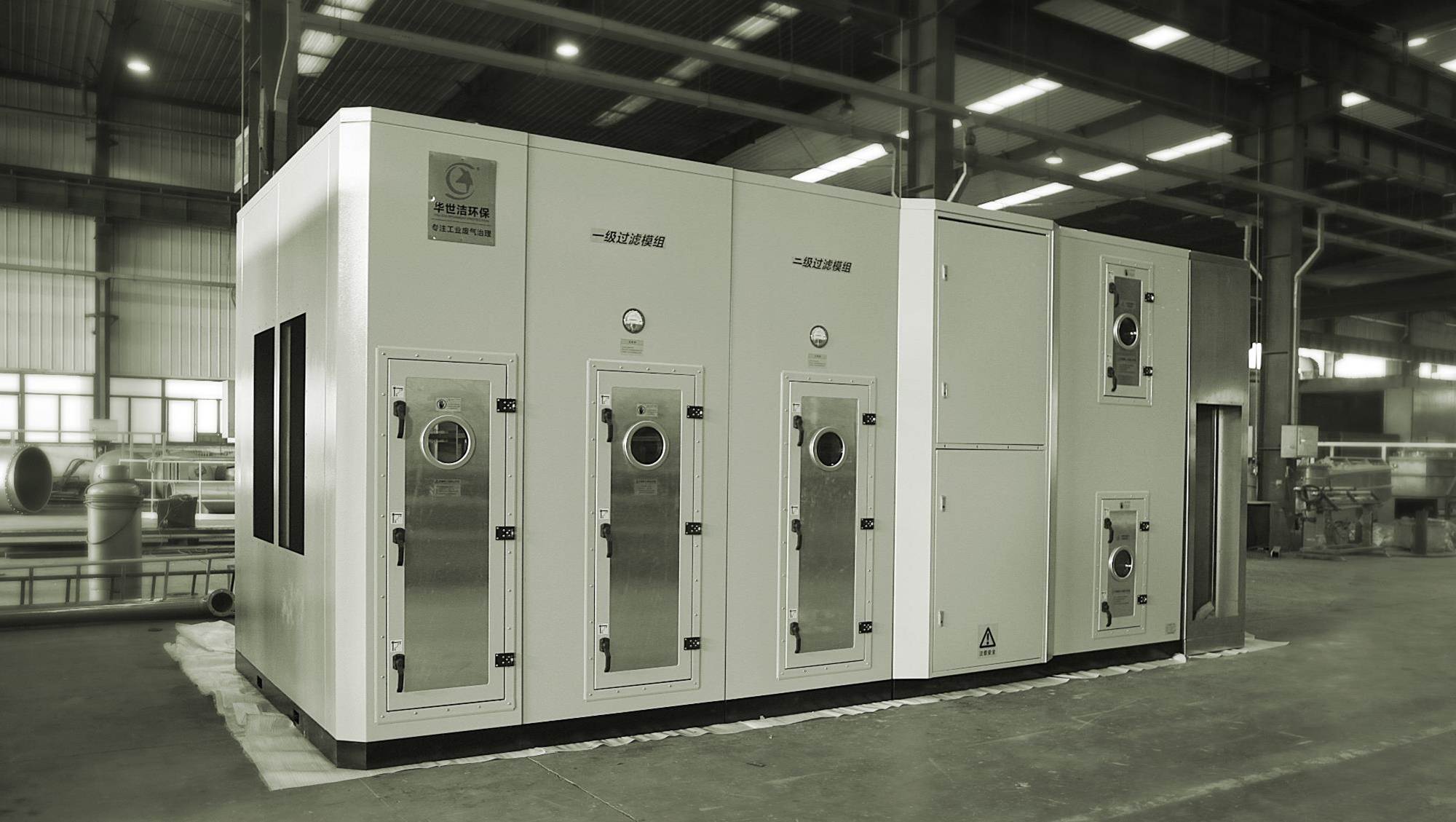
Naboco's independently produced zeolite molecular sieve rotors have broken the foreign monopoly on this technology, making it possible for domestic environmental protection enterprises to obtain the most cost-effective process solutions. Naboco is willing to share its research achievements with domestic environmental protection enterprises and jointly contribute to the VOCs treatment in China.