Shandong has launched a 9-month provincial-level inspection of air pollution, covering these seven cities.
In order to implement the "2017 Air Pollution Prevention and Control Work Plan for the Beijing-Tianjin-Hebei and Surrounding Areas" (referred to as the "Work Plan") and the "Implementation Details for the 2017 Air Pollution Prevention and Control Work Plan of Beijing-Tianjin-Hebei and Surrounding Areas" (referred to as the "Implementation Details"), to supervise each city to conduct thorough self-examination and self-correction, and to promptly identify and eliminate existing problems, and to effectively promote the rectification and implementation of problems identified by the national intensified supervision, the Provincial Environmental Protection Department has decided to carry out provincial-level supervision of air pollution.
It is known that this supervision will start on June 28, 2017 and end on March 31, 2018. The supervision scope includes 7 transmission channel cities, namely: Jinan, Zibo, Jining, Dezhou, Liaocheng, Binzhou, and Heze.
The main supervision contents include:
- The implementation of the "Work Plan" and the "Implementation Details" by all levels of Party committees, governments and relevant departments.
- The operation of environmental protection facilities and the compliance of emissions of key industries enterprises. The supervision will focus on the installation and operation of desulfurization, denitrification and dust removal facilities in all industrial enterprises, and will specifically check whether the records of pollution facilities operation and maintenance are complete and consistent with the actual situation, and whether there are any behaviors of not operating pollution prevention facilities normally, temporarily suspending production for the purpose of evading on-site inspections, or opening emergency emission channels under non-emergency circumstances to emit air pollutants in an evasive way.
- The installation, connection and operation of automatic monitoring facilities for "high-rise sources". The supervision will mainly check the compliance of online monitoring data, inspect whether the automatic monitoring facilities are operating normally, whether they are connected to the environmental protection department, whether they reflect the actual pollution situation of enterprises, and whether there are any acts of fraud, tampering with or forging automatic monitoring data, or interfering with automatic monitoring facilities.
- The investigation and elimination of "small, scattered and unregulated" enterprises. The supervision will mainly check whether the investigation and elimination work has been completed in accordance with the progress requirements of the "Work Plan" and whether a management ledger has been established.
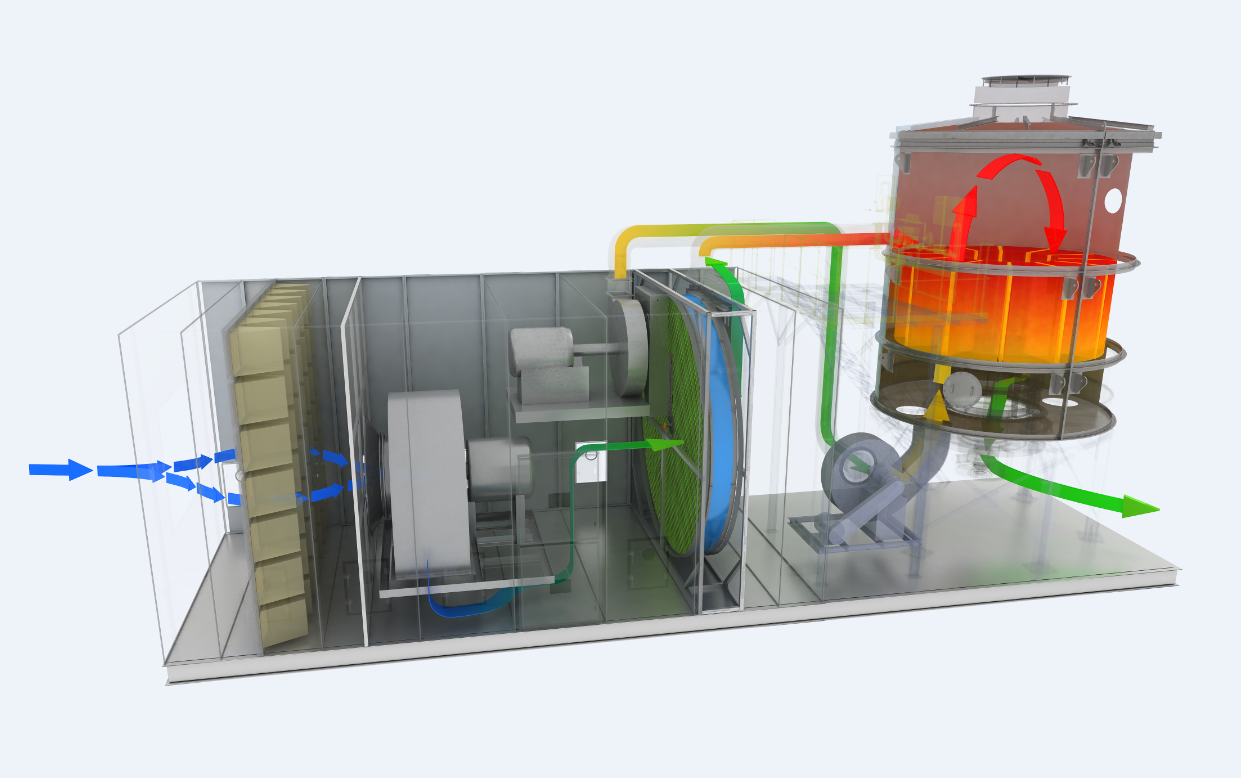
- The installation and operation of pollution control facilities for enterprises involving volatile organic compounds (VOCs).
- The rectification and implementation of feedback problems from the intensified supervision by the Ministry of Environmental Protection.
According to the supervision plan, this supervision will conduct on-site inspections through random spot checks, night inspections, surprise inspections, and "comeback attacks", mainly focusing on the situation of air pollution source governance and the effect of self-examination and self-correction of each city. For problems found, local authorities will be urged to take immediate corrective measures to ensure timely rectification. For prominent problems or those with incomplete rectification, accountability suggestions will be proposed and transferred to the supervisory and disciplinary inspection department with jurisdiction in accordance with relevant regulations and requirements, and strict accountability and punishment will be carried out.