Research Progress on Organic Waste Gas Treatment Technology for Automobile Painting
This article briefly discusses the sources, hazards, and emission reduction methods of organic waste gas during automotive painting processes, and introduces several waste gas treatment technologies such as adsorption method, combustion method, low-temperature condensation method, activated carbon adsorption - catalytic combustion method, and biological treatment method, and makes a comparison to provide theoretical references and basis for the effective treatment of organic waste gas in the future automotive painting industry.
Spraying is an important process in the automotive manufacturing and maintenance industry, and it is also the process that generates the most waste gas.
With the implementation of stricter environmental protection laws and regulations such as the "Environmental Protection Law" and the "Air Pollution Prevention and Control Law", China has become increasingly strict in terms of air environmental quality and enterprise waste gas treatment requirements. How to take effective measures to treat spraying waste gas and reduce VOCs emissions is a question that every automotive manufacturer and maintenance company should consider.
1. Main sources of spraying waste gas
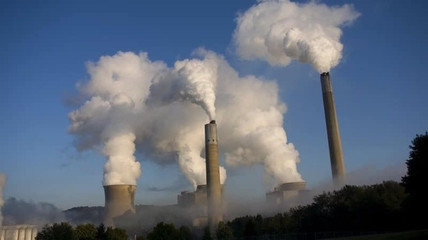
Spraying waste gas mainly comes from the organic solvents contained in the paint that volatilize during spraying and the volatile waste gas generated during the drying process, which is called volatile organic compounds (VOCs), and the main components are benzene, toluene, and xylene, etc. Generally, the VOCs content is the highest during the use of intermediate coating, top coating, and cleaning solvents. Specifically in the production workshop, the rooms with the most organic waste gas are spray painting rooms, drying rooms, paint mixing rooms, and drying rooms, and the components of the waste gas produced by different workshops are not the same. Liu Yubing et al. analyzed the chemical components of VOCs in the coating process of light vehicle painting technology, and found that the main VOCs chemical components in the coating process are aromatic hydrocarbons and OVOCs substances such as ethyl acetate, butyl acetate, and propylene glycol methyl ether acetate. 3.2 Harm of spraying waste gas
The organic solvents in the spraying paint are highly toxic, and benzene, toluene, etc. volatilize into the air during spraying and are harmful to operators and the natural environment. After being inhaled through the respiratory tract, they can cause poisoning, which is currently recognized as a strong carcinogen. Long-term inhalation of low-concentration spraying waste gas can cause chronic respiratory diseases such as coughing, chest tightness, and asthma, and in severe cases, convulsions and coma may occur; inhalation of benzene vapor with a concentration greater than 1500mg/m3 can cause aplastic anemia. In addition, organic waste gas plays an important role in the formation of photochemical smog and acid rain. Therefore, enterprises have the responsibility and obligation to take effective emission reduction measures and treatment technologies to reduce waste gas emissions and reduce the harm of harmful substances to human health and environmental quality. 3.3 Emission reduction methods of spraying waste gas
3.1 Use of environmentally friendly coatings
Environmentally friendly coatings are coating products that meet the technical requirements proposed by the national environmental protection logo. They have the characteristics of low VOC content, energy saving, and zero pollution. Generally, environmentally friendly coatings are divided into water-based coatings, solvent-based coatings, and powder coatings. The solvents of solvent-based coatings are mostly toluene, xylene, esters, alcohols, etc., and ultimately volatilize into the atmosphere as VOCs; water-based coatings have a solvent of more than 85% of water and a low content of organic solvents; while powder coatings consist of polymers, pigments, and additives, and the total coating in the spraying process can be recycled, the VOCs production is very small, and the harm to the environment is very small. The use of powder coatings results in a much lower VOCs emission than liquid coatings. Since the "Clean Production Standards for Automobile Manufacturing (Painting)" (HJAT293-2006) came into effect in 2006, automotive spraying paints in the market have begun to transition from solvent-based coatings to water-based coatings, and environmentally friendly powder coatings such as silica mud products and activated carbon wall materials have minimal environmental pollution. When using the automatic spraying process, reasonable design and adjustment of the air velocity can improve the spraying efficiency and reduce the generation of organic waste gas. Currently, the electrostatic cup spraying process and the high-pressure airless spray gun tools are relatively advanced in the industry. Therefore, continuously improving the production process and eliminating outdated equipment will be beneficial to reducing the emission of organic waste gas. Additionally, in the process of automobile manufacturing and maintenance, it is recommended to adopt energy-saving, low-consumption, and pollution-free processes, such as phosphating process, degreasing process, etc.
4 Spray Waste Gas Treatment Technology
At present, the main methods for treating spray waste gas in China and abroad include low-temperature condensation method, activated carbon adsorption - catalytic combustion method, and biological treatment method, etc.
4.1 Low-Temperature Condensation Method
The condensation method utilizes the fact that different waste gas components have different saturated vapor pressures at different temperatures. By lowering the temperature of the waste gas, it can be condensed into a liquid state for recovery. The condensation treatment method requires relatively simple equipment and operating conditions, and the purity of the recovered substances is relatively high. However, this method requires the waste gas to be cooled to a very low temperature, which is not economically practical. This method is mainly used for treating VOCs waste gas with high concentration, high water vapor content, simple waste gas composition, and with recovery value.
4.2 Activated Carbon Adsorption - Catalytic Combustion Method
The activated carbon adsorption - catalytic combustion method is an exhaust gas treatment technology that effectively combines the advantages of activated carbon adsorption method and catalytic combustion method to achieve continuous, efficient, and energy-saving treatment effects. The treatment efficiency is further improved, the operating cost is reduced, and overall it is both economical and effective. This method mainly relies on the adsorption and desorption processes to achieve the treatment effect. After pre-treatment of the spray waste gas, it is adsorbed and purified by the activated carbon. When the activated carbon is saturated, it undergoes catalytic combustion in the catalytic bed to completely decompose the organic substances. For low-concentration, high-flow organic waste gas, the activated carbon adsorption - catalytic combustion method is an economical and environmentally friendly choice.
4.3 Biological Treatment Method
The biological treatment method is a method that oxidizes and decomposes organic waste gas into harmless substances such as carbon dioxide and water under the decomposition effect of microorganisms. The biological treatment method has the advantages of low cost and less secondary pollution. It is an environmentally friendly exhaust gas treatment technology. According to the treatment principle, this method has certain requirements for the water solubility and biodegradability of the gas, and the reaction time is longer and the operation and maintenance are more cumbersome. This method is suitable for treating medium and low-concentration organic waste gas.
5 Conclusion
Given the harmfulness of vehicle painting exhaust emissions, it is necessary to strictly control and manage vehicle painting exhaust. When choosing the treatment method for VOCs, factors such as cost and treatment efficiency should be comprehensively considered. Based on the actual situation, effective treatment measures should be taken to strictly implement relevant pollutant emission standards, so as to achieve better results in exhaust treatment.