Global Zeolite Rotating Disk Industry Technology Development and Market Research Report (2026 GEP7Q8R)
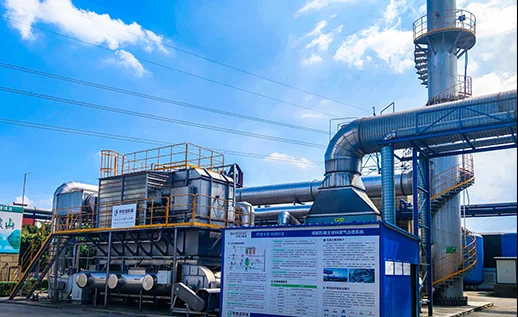
The global zeolite rotor market is undergoing a profound transformation driven by strict environmental regulations and industrial upgrading. By the end of 2025, the global market size has exceeded 1.5 billion US dollars, and it is expected that the compound annual growth rate will remain at a high level of 8.5% from 2026 to 2030. The core driving force behind this growth trend stems from the nearly stringent continuous tightening of volatile organic compound emission standards by major economies, especially in high value-added industries such as semiconductor manufacturing, high-end coating, and lithium battery production, where zeolite rotors have become indispensable core equipment for end-of-line treatment. Asia, particularly East Asia and Southeast Asia, with its vast manufacturing base and rapidly advancing environmental policies, accounts for more than 55% of the global demand, becoming the absolute engine of market growth.
Technological progress is another key dimension shaping the future landscape of the industry. Since 2025, the industry's research and development focus has significantly shifted towards enhancing rotor performance and expanding application boundaries. The commercial application of new hydrophobic zeolites and composite functional adsorption materials has increased the processing efficiency of zeolite rotors for high humidity and multi-component complex waste gases by 20% to 30%. Modular and intelligent design has become the mainstream direction of product iteration, and intelligent systems integrating online monitoring, predictive maintenance, and energy optimization algorithms are helping users significantly reduce the total life cycle operating costs. This trend is already fully demonstrated in the new product launch in 2026.
From the application perspective, the market structure shows a feature of diversified deepening. The traditional automotive coating, printing and packaging industries maintain stable demand, while emerging fields are showing huge potential. According to GEP Research data, in the global waste gas treatment field during the production process of lithium batteries in 2025, the purchase amount of zeolite rotor systems increased by more than 40% year-on-year, and it is expected to become the second-largest application market after the semiconductor industry by 2030. Industries with extremely high requirements for waste gas recovery purity, such as pharmaceuticals and chemical manufacturing, have also created new growth space for the zeolite rotor-cooling condensation recovery combined process.
The competitive landscape in the supply side presents a feature of both concentration and differentiation. Approximately 60% of the global market share is controlled by a few leading enterprises with full-chain capabilities from material research to system integration. The competition focus has shifted from simple price competition to core technology patents, major project performance, and the construction of global service networks. This group of specialized manufacturers focusing on specific regional markets or specific applications (small and medium-sized coating lines, food processing odor treatment) has formed a stable competitive barrier in local markets with flexibility and customized services. The competitive situation in 2026 indicates that integration and specialization will be the main themes in the coming years.
Industry policies and international standards constitute the rigid framework for industry development. From 2025 to 2026, several countries and regions updated industrial waste gas emission limits and included key indicators such as adsorption efficiency, desorption temperature, and sealing performance of zeolite rotors in technical specifications or recommended standards systems. These policies not only directly stimulated the demand for equipment upgrades but also pushed the entire industry towards high-performance and high-reliability upgrades. Closely related to this is the increasingly active patent activities worldwide around zeolite formulations, structural designs, and regeneration processes, with an average annual growth rate of 12% in related patent applications over the past three years, constituting the core assets for enterprises to build technological moats.
The international trade and supply chain landscape is also in a state of dynamic adjustment. The production capacity of the core material of zeolite rotors - high-performance synthetic zeolites - is still highly concentrated in a few countries, making the stability of the global supply chain a concern. The GEP Research trade data for 2025 shows that there is a significant trade deficit in the import and export of key materials, prompting downstream manufacturing enterprises to actively seek diversified or localized supply chain alternatives. The international trade of complete machine systems exhibits a characteristic of exporting from high-end markets to emerging markets, as well as a dual focus on engineering service exports driven by regional turnkey projects. It is expected that this trend will continue to deepen before 2030.