Solutions related to VOCs treatment in the packaging printing industry
Common VOCs: benzene series, petroleum hydrocarbon compounds, organic chlorides, Freon series, organic ketones, amines, alcohols, ethers, esters, acids, etc. In the printing industry, common ones include esters, alcohols, ketones, benzene, etc. VOCs are key precursors of PM2.5 and O3, and contribute significantly to summer ozone and fine particulate matter pollution. Some VOCs have a foul smell and toxicity, seriously endangering human health.
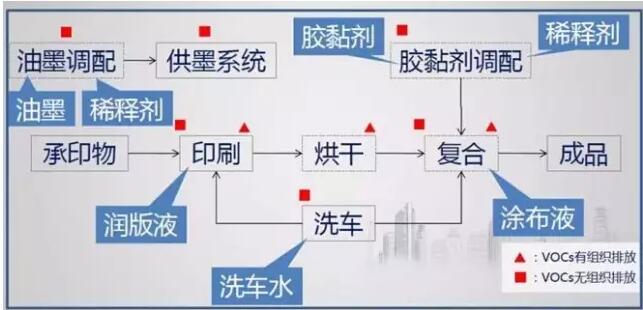
The use of solvent-based raw materials in printing and pre-press, post-press processes, including ink, toner, cleaning agents, adhesives, coating liquids, diluents, etc., organic solvents.
The main emission treatment nodes of printing waste gas are in the printing, laminating, coating, varnishing and drying processes, which can be treated through organized collection and emission; emissions during storage, mixing, and logistics processes are unorganized and require certain sealing treatment.
In accordance with the "Emission Standards for Air Pollutants from Printing Industry" (DB31/872-2015), it will be implemented as of March 1, 2015. Existing enterprises shall implement it starting from July 1, 2016 (the figure below shows the standards of Shanghai).
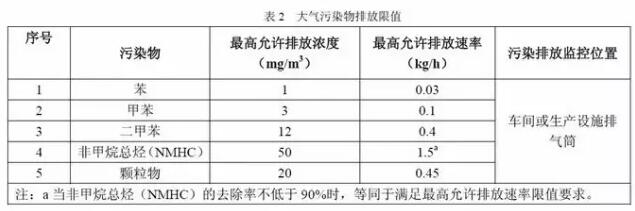
The production site needs to be sealed and have organized air intake and exhaust. Pollutant emissions should be collected and centrally treated. If any of the following three situations occur, it will be regarded as unorganized emission:
1) Not operating in a sealed space or equipment as per regulations;
2) Not installing the required exhaust collection and treatment devices as per regulations;
3) Other situations causing emissions and dust leakage or dispersion.
Currently, pollutant reduction mainly relies on end-of-pipe treatment. New technologies have emerged in production process control to improve material recycling rates and reduce pollutant emissions. Source prevention mainly involves the development of materials with low VOCs content, which is also increasingly strengthened. Enterprises also need to gradually adapt to the characteristics and usage methods of the materials.
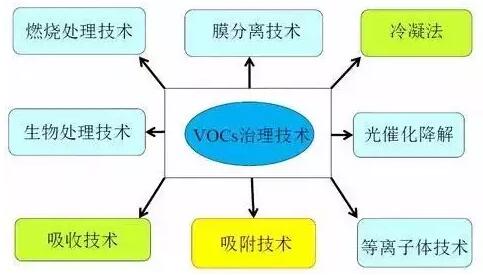
Enterprises choose the appropriate solutions based on their production environment, production processes, and production scale. For instance, if the VOCs emissions from processes such as intaglio printing and compounding are high, they need to select a solution with stronger treatment capacity; if the production space is large, they should choose an exhaust fan with a large volume for waste gas collection; if the equipment has a large production intensity, they also need to select a treatment plan with strong capabilities.
Environmental impact assessment documents and approvals, trial production (trial operation) and environmental protection facilities completion acceptance application and approval documents;
Pollution discharge declaration materials;
Pollution discharge permit (gradually approved and issued);
Operation procedures and operation records of pollution prevention and control facilities;
Distribution map of risk substances storage points in the factory area, distribution map of water, gas, sound, and waste residue discharge (storage) points;
Standardized management archives of industrial hazardous waste generating units.
Failure to cooperate with law enforcement or refusal to comply with law enforcement; failure to obtain a pollution discharge permit to discharge atmospheric pollutants; discharging atmospheric pollutants beyond the emission standards or beyond the total control indicators of key atmospheric pollutants; discharging atmospheric pollutants by evading supervision. Failure to set up atmospheric pollutant discharge outlets as required.
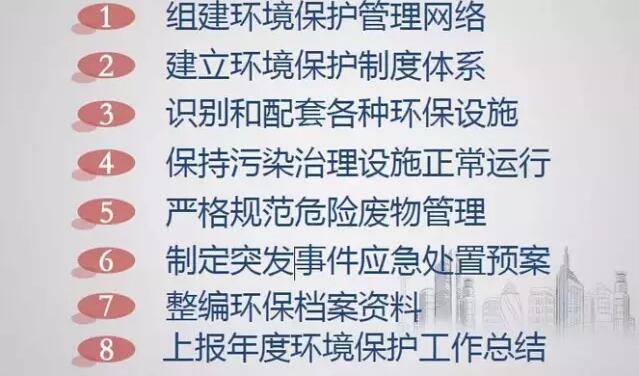
VOCs waste gas treatment is the prerequisite for the future development of the printing and packaging industry. Enterprises must establish a complete set of prevention and treatment mechanisms, formulate corresponding management norms and emergency plans, and form documentation for reference, training, and implementation.